Industry News

Home/News/Industry News/Efficiency Breakthroughs in Plastic Fork Mould Design

Efficiency Breakthroughs in Plastic Fork Mould Design

The disposable tableware industry is experiencing significant improvements in plastic fork mould technology, enabling more efficient and sustainable manufacturing processes. These precision engineering components form the foundation for producing billions of plastic forks annually, with modern plastic fork mould designs achieving new levels of speed and consistency. Recent innovations in plastic fork mould construction and operation are helping manufacturers meet changing market demands while addressing environmental concerns about single-use plastics.

Material science breakthroughs have transformed plastic fork mould durability and performance. High-grade tool steels with specialized coatings now withstand the abrasive effects of continuous polymer injection, extending mould lifespan significantly. Advanced plastic fork mould designs incorporate precise cooling channels that optimize cycle times while maintaining dimensional accuracy. Some progressive plastic fork mould systems now feature self-cleaning surfaces that reduce maintenance downtime between production runs.

These material and engineering improvements help manufacturers Improve output from each plastic fork mould investment.

Production efficiency has become a key focus in plastic fork mould development. Contemporary designs enable faster cycle times through optimized gate systems and ejection mechanisms. Many modern plastic fork mould configurations produce multiple fork styles simultaneously using interchangeable inserts. Some high-capacity plastic fork mould systems incorporate robotic part removal that maintains consistent output quality during extended production cycles.

These innovations allow manufacturers to meet fluctuating demand while controlling per-unit production costs.

The shift toward more sustainable materials has prompted plastic fork mould adaptations for alternative resins. Moulds designed for traditional polystyrene now accommodate plant-based PLA and other biodegradable compounds without sacrificing output quality. Specialized plastic fork mould designs account for the different flow characteristics and cooling requirements of eco-friendly materials. Some manufacturers have developed plastic fork mould systems that can switch between conventional and biodegradable resins with small adjustments, providing production flexibility as material preferences evolve.

Quality control advancements in plastic fork mould technology ensure consistent product standards. Precision-machined cavities produce forks with smooth edges and uniform tine spacing that meet strict food safety requirements. Modern plastic fork mould systems often include integrated sensors that monitor critical parameters like temperature and pressure in real time. These monitoring capabilities help operators maintain ideal plastic fork mould performance throughout production runs, reducing material waste from defective products.

Customization options have expanded in plastic fork mould offerings to meet diverse market needs. Manufacturers can now select from moulds that produce everything from standard dinner forks to specialized designs for specific cuisines or food types. Some plastic fork mould systems create products with textured grips or reinforced tines for enhanced functionality. The ability to quickly change cavity inserts allows single plastic fork mould systems to produce multiple fork variations, giving producers valuable flexibility in responding to customer requests.

Maintenance and cleaning processes for plastic fork mould systems have become more efficient. Many current designs feature simplified disassembly for thorough cleaning and inspection. Some plastic fork mould configurations incorporate automated cleaning cycles that reduce downtime between material changes or color switches.

Future developments in plastic fork mould technology may include smart systems that automatically adjust to material variations or predict maintenance needs. Some experimental concepts explore rapid heating and cooling methods that could further reduce cycle times. As the disposable cutlery market continues evolving, plastic fork mould innovations will play a crucial role in balancing production efficiency with environmental responsibility.

Featured Products

Company Profile

about hengqi

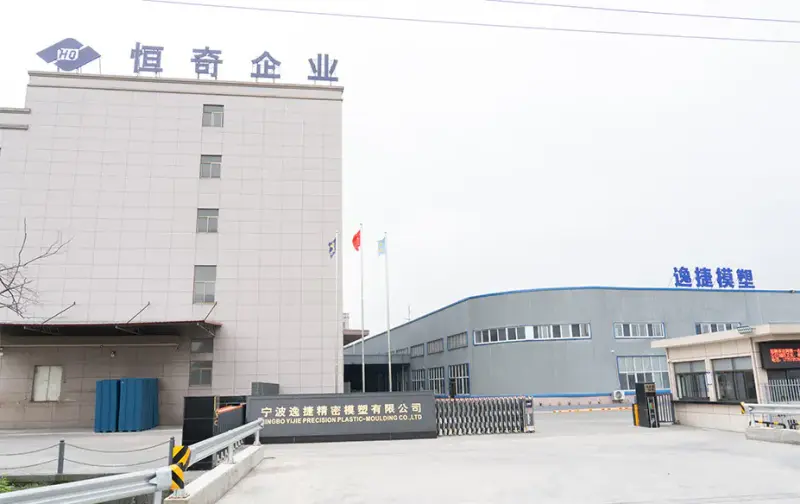
Ningbo Hengqi Precision Mould Co., Ltd. is professional China Plastic Injection Mould Manufacturers and custom Plastic Injection Mould factory, engaged in the development and manufacture of thin-wall packaging moulds. Our company has complete manufacturing equipment, scientific quality management system, rich practical experience in mould and hot runner production, combined with professional system design, using high-precision high-speed machining centers to achieve mold processing high standards. Hengqi Mould is in the leading position in the field of thin-wall injection molds in China. It produces thousands of sets of PP lunch boxes, cups and in-mold labeling system molds with a wall thickness of 0.35-0.45MM each year, which are supplied to the domestic market and exported to overseas. Hengqi Mould adheres to the spirit of continuous innovation and development of precision moulds.

2012

In 2012, Hengqi Mould Factory was established.

2016

In 2016, Hengqi Enterprise established Tianjin factory.

2017

In 2017, Hengqi officially changed from individual to company.

2019

In 2019, Hengqi established Chengdu branch and Betterfork cutlery department.

2024

In 2024, Hengqi continues to expand international markets.

view moreview more

Certification

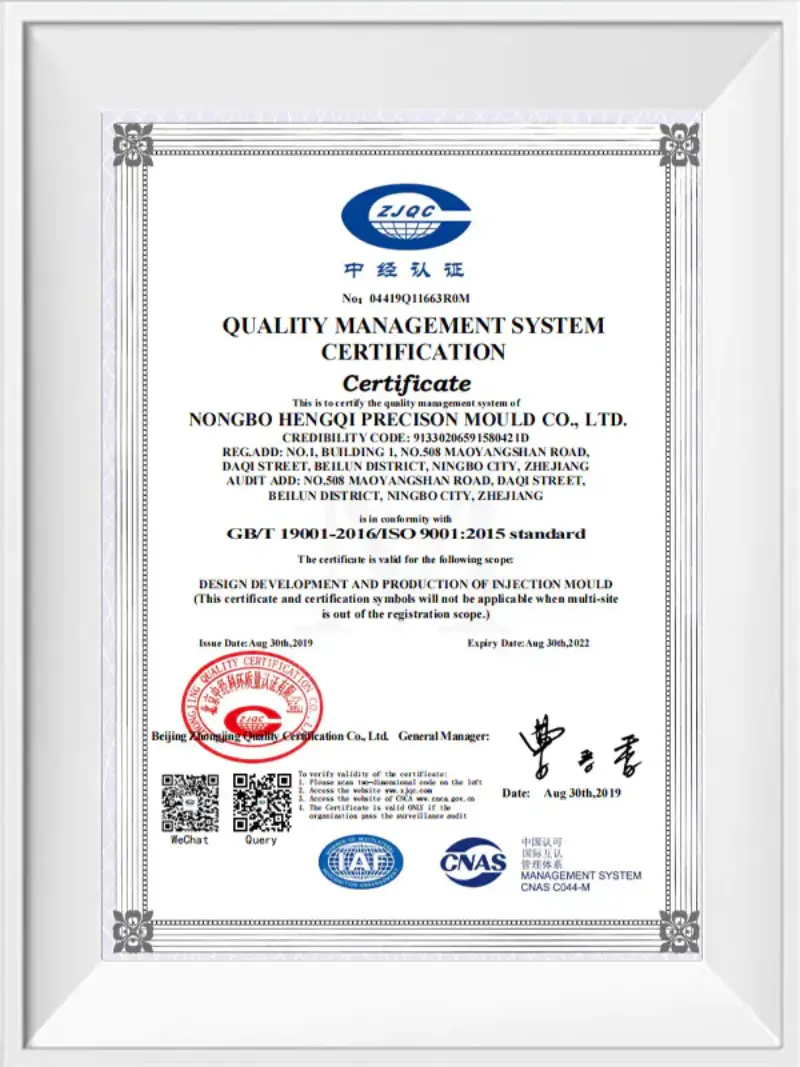
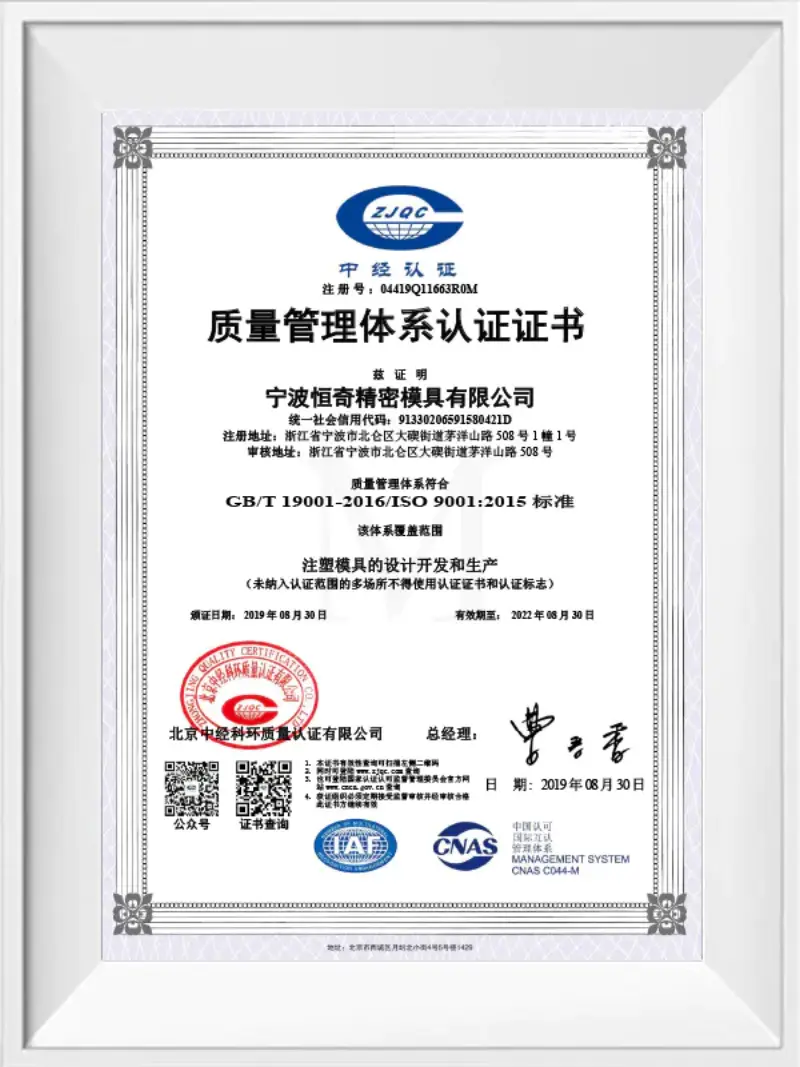
Quality Management System
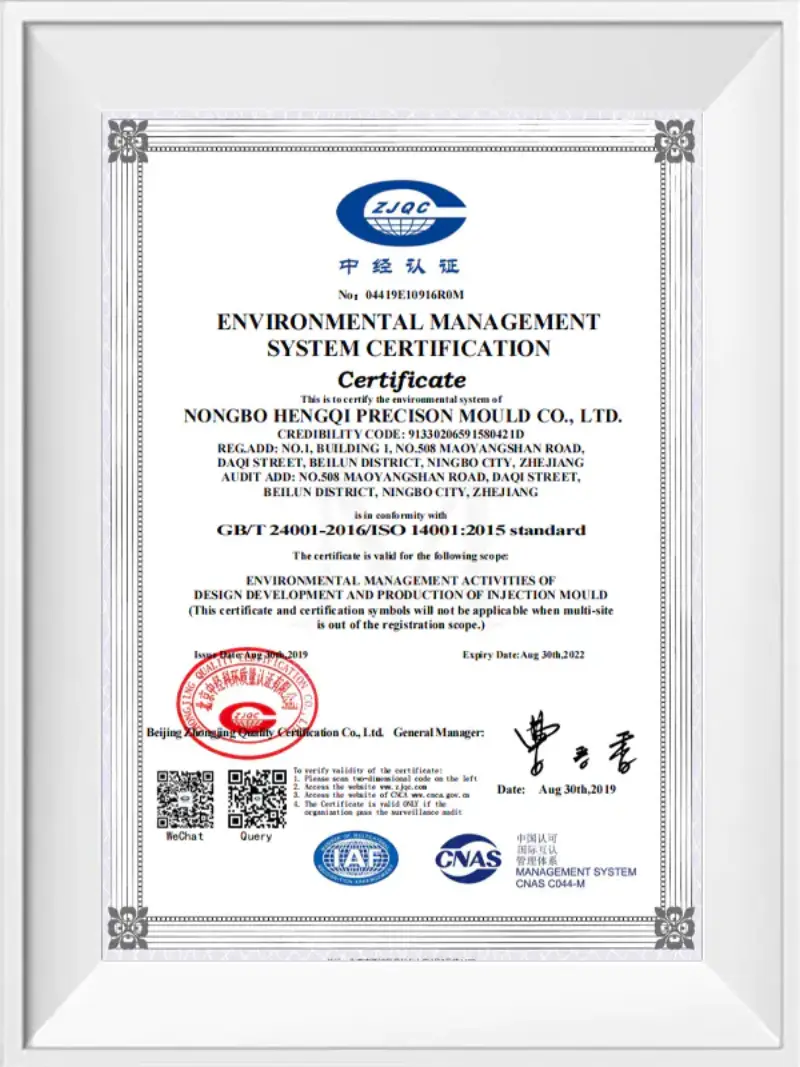
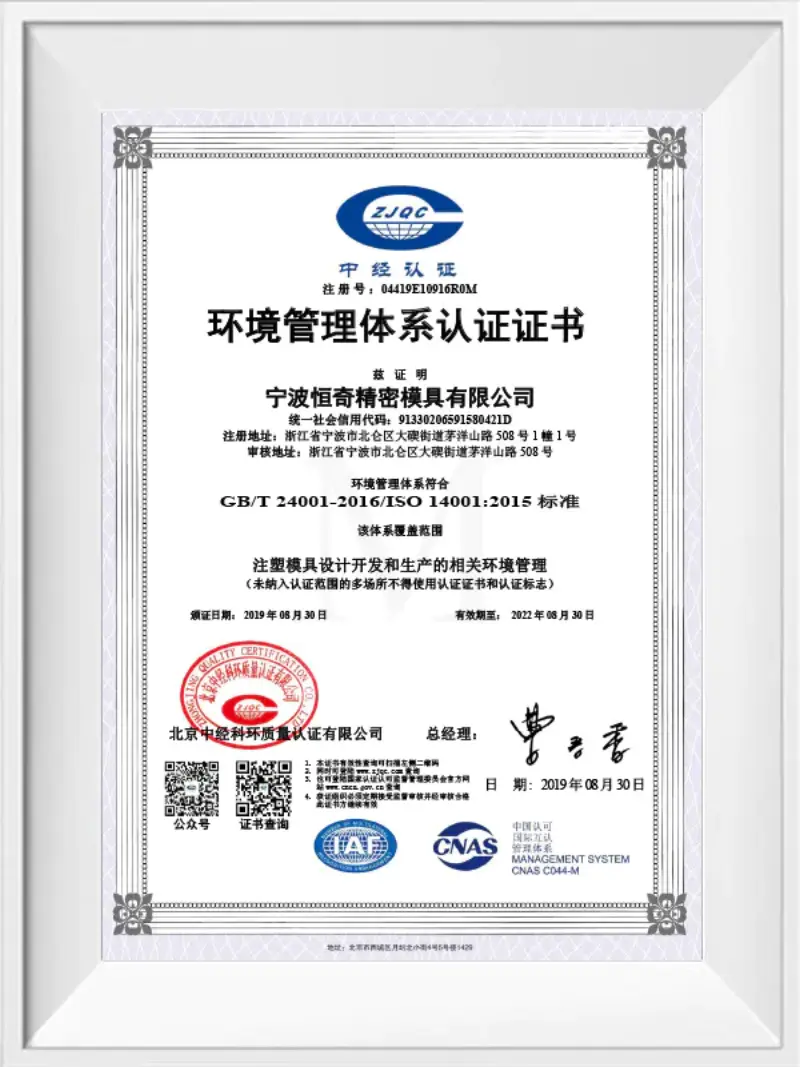
Environmental Management System
AS Certification
SAAA Certification