Industry News

Home/News/Industry News/Understanding the Key Differences in Injection Molding Machines

Understanding the Key Differences in Injection Molding Machines

Injection molding machines are basically the main workhorses when it comes to turning plastic into all sorts of parts on factory floors. In day-to-day production, you' ll see three types getting used the most: the ones that run mainly on fluid power, the ones that rely on electric drives, and the ones that combine bits of both. Each type has its own way of doing things, and that really affects how well it fits into different shops and different kinds of jobs.

Picking the right one usually boils down to what the parts actually look like, how many you need to crank out, and how the whole production line flows during a regular shift. Over the years, the people who run these machines have seen firsthand how they actually behave in real working conditions, so the way they choose and set them up keeps changing little by little.

Examining Traditional Fluid-Based Systems and Their Role in Production

Fluid-based systems have been kicking around for a long time in plenty of factories because they' re good at clamping down hard when you' re dealing with bigger or more complicated shapes. The power comes from pressurized fluid that pushes everything with solid, steady force, which really helps when thick walls or larger pieces need to fill out all the way. In shops where the machines run for hours on end and the parts need strong pressure right through the cycle, these systems usually just get on with the job without causing too many headaches.

The downside is that the fluid keeps circulating even when the machine is sitting idle between cycles, so the energy bill quietly adds up over a full shift. Maintenance usually means checking fluid levels regularly and keeping an eye out for leaks, because any spill makes the floor around the machine messy and means extra cleaning time. Still, fluid-based machines are still seen a lot in areas that crank out high volumes of parts, like car components or everyday packaging.

Their knack for handling heavy workloads has kept them in regular use even as newer types have shown up.

Reviewing Electric-Driven Systems and Their Operational Characteristics

Electric-driven systems have been getting more attention lately because they only draw power when something is actually moving, which keeps overall energy use noticeably lower than machines that keep running constantly. Servo motors handle all the movements with pretty good precision, so the machine can repeat the same positions and speeds quite consistently from one cycle to the next. That level of control comes in handy when you' re making detailed shapes where even tiny differences could mess up how the final part fits or performs.

Since there' s no fluid in the drive system, the area around the machine stays quieter and there' s much less risk of leaks making things dirty, which is a big plus in cleaner work environments. Setting them up and taking care of them day to day is usually simpler because there aren' t as many hoses and tanks to keep track of. On the flip side, putting these systems in place often costs more upfront due to the precise components involved, and they might not always match the strong holding force of fluid-based machines in every case.

Even so, when the job calls for tight control and steady, repeatable results — like smaller detailed parts or delicate assemblies — electric-driven machines often feel like a really practical choice that helps keep energy consumption in check.

Considering Combined Systems That Blend Different Drive Approaches

Combined systems put parts from fluid power and electric drives together in the same machine. Usually the fluid side handles the heavy clamping work while the electric side takes care of the actual injection and the more precise movements. The idea is to get strong holding power while also gaining better control and using less energy during certain parts of the cycle. What you end up with is equipment that can move more easily between different kinds of parts without having to swap out the whole machine.

In actual production lines, these combined machines often run in places that make a mix of items — from medical parts to regular consumer goods — because the flexibility helps keep things moving without too many interruptions. Maintenance involves keeping an eye on both the fluid and electric sides, but the design does manage to reduce some of that constant energy draw you get with full fluid systems.

That kind of balance is exactly why a lot of shops consider these machines when production needs keep switching between different jobs and they don' t want to give up too much efficiency either way.

Looking at How Each Type Fits Into Specific Manufacturing Situations

Different production lines tend to lean toward one type or another depending on the parts they' re making and how big the operation is. Fluid-based systems often get picked when there are large volumes of bigger or thick-walled parts to produce, since the strong force helps fill the mould completely even when conditions are tough. Electric-driven systems usually suit lines that focus on smaller, more detailed components where steady accuracy matters more than raw power, like in electronics or precision work.

The combined systems sit somewhere in the middle, giving enough flexibility for shops that handle all sorts of part sizes and complexities without going all-in on just one extreme. In every case, things like available space, how noisy the machine is, and how easy it is to keep clean can influence which type feels more comfortable in daily use. The decision usually comes down to thinking about how the machine will work with the existing moulds, how material flows through, and what the overall cycle needs to look like so there aren' t unnecessary hold-ups or extra adjustments later.

Observing Broader Trends in Machine Selection and Operation

As production lines keep adjusting to new demands, choosing injection molding equipment comes down to a mix of real practical needs, how costs add up over time, and how the machines affect the workspace around them. Fluid-based machines still hold their ground in places where strong power and long holding times are common. Electric options are gaining traction in settings that care more about precise control and keeping ongoing energy use lower.

Combined systems offer a middle ground that many shops find useful when they need to produce both simple parts and more refined ones. The way these three types interact has pushed facilities to look beyond just how the machine performs in a single cycle and also consider longer-term things like daily maintenance, the feel of the workspace, and how easily the equipment can adapt when the mix of production changes.

This kind of steady evaluation helps shops make more balanced decisions that keep output reliable without ignoring how things actually work on the shop floor every day.

General Characteristics Across Injection Molding Machine Categories

Category Power Delivery Approach Common Production Focus Operational Notes

Fluid-Based Systems Pressurized fluid for force generation Larger parts and high-volume runs Steady power delivery with attention to fluid management

Electric-Driven Systems Servo motors for motion control Detailed and precision-oriented items Focused energy use during active movements

Combined Systems Blend of fluid for holding and electric for other motions Mixed part types and varied requirements Flexibility across different cycle demands

Reflecting on Practical Considerations When Evaluating Machine Types for Ongoing Use

When shops look at these injection molding machines over the long haul, the real differences show up in how they fit into daily routines. Fluid-based ones tend to handle heavy loads without much complaint, but they need regular checks on the fluid side to keep things clean and running right. Electric-driven setups often feel simpler to live with because they stay quiet and only pull power when actually moving, which can make the whole workspace easier to manage.

Combined systems sit somewhere in the middle, giving enough holding force where it counts while letting the electric parts handle the finer control. In the end, the decision usually comes down to matching the machine's everyday behavior with the kind of parts being made and how the line flows from one shift to the next. Some places stick with what has worked reliably for years, while others mix types to cover different jobs without too much hassle.

Either way, the focus stays on keeping output steady without adding extra headaches to the daily work.

Featured Products

Company Profile

about hengqi

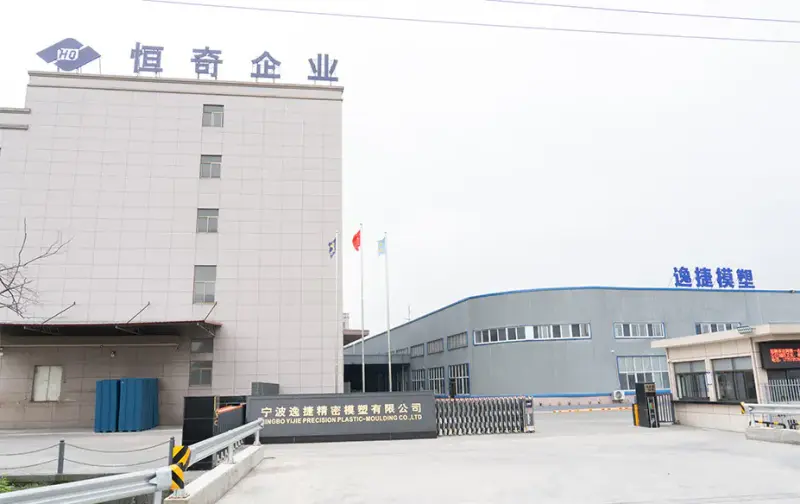
Ningbo Hengqi Precision Mould Co., Ltd. is professional China Plastic Injection Mould Manufacturers and custom Plastic Injection Mould factory, engaged in the development and manufacture of thin-wall packaging moulds. Our company has complete manufacturing equipment, scientific quality management system, rich practical experience in mould and hot runner production, combined with professional system design, using high-precision high-speed machining centers to achieve mold processing high standards. Hengqi Mould is in the leading position in the field of thin-wall injection molds in China. It produces thousands of sets of PP lunch boxes, cups and in-mold labeling system molds with a wall thickness of 0.35-0.45MM each year, which are supplied to the domestic market and exported to overseas. Hengqi Mould adheres to the spirit of continuous innovation and development of precision moulds.

2012

In 2012, Hengqi Mould Factory was established.

2016

In 2016, Hengqi Enterprise established Tianjin factory.

2017

In 2017, Hengqi officially changed from individual to company.

2019

In 2019, Hengqi established Chengdu branch and Betterfork cutlery department.

2024

In 2024, Hengqi continues to expand international markets.

view moreview more

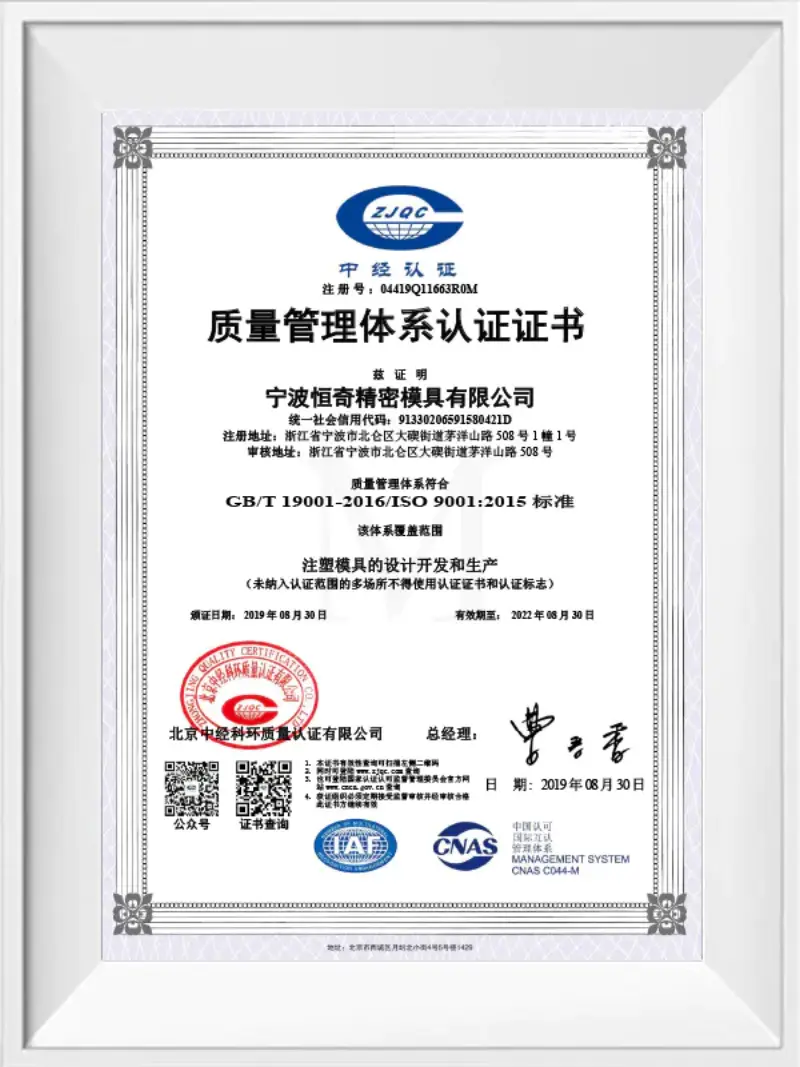
Certification

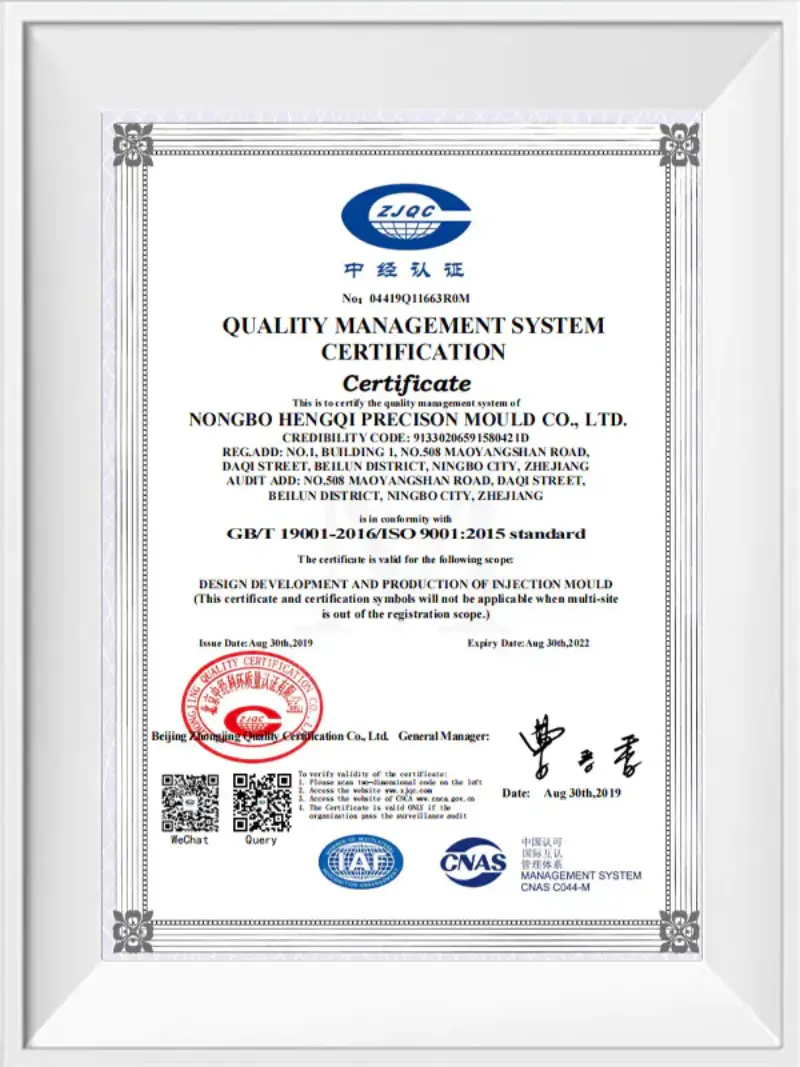
Quality Management System
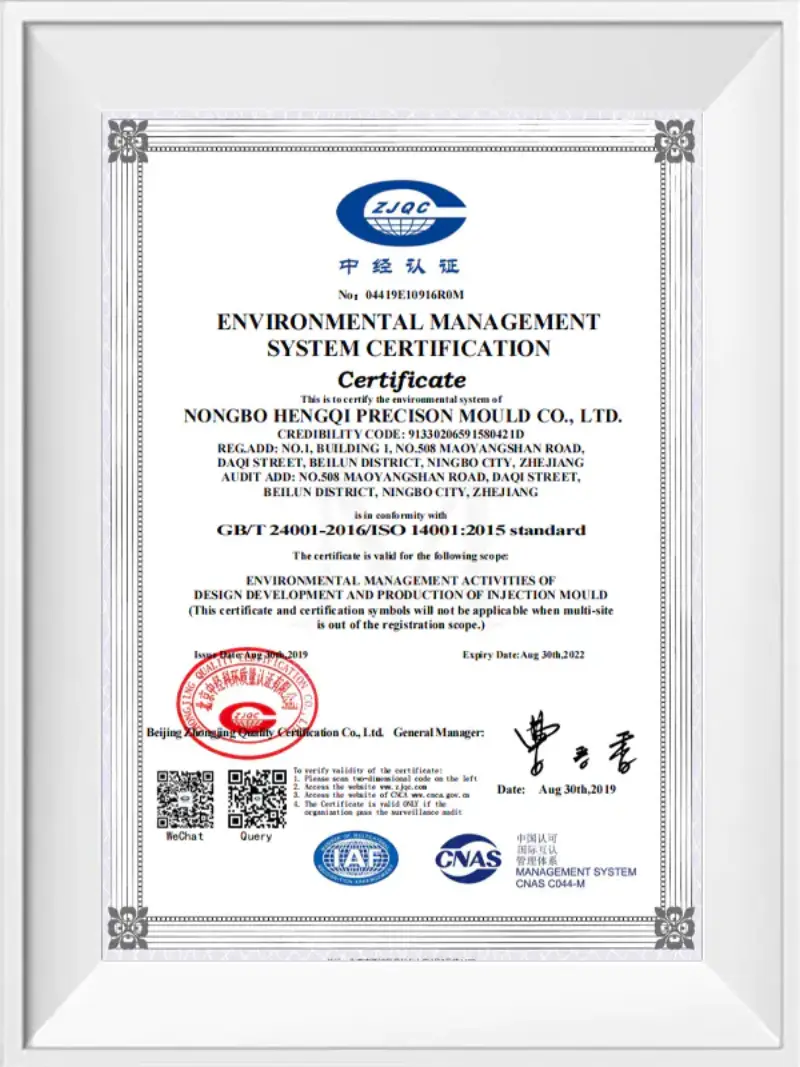
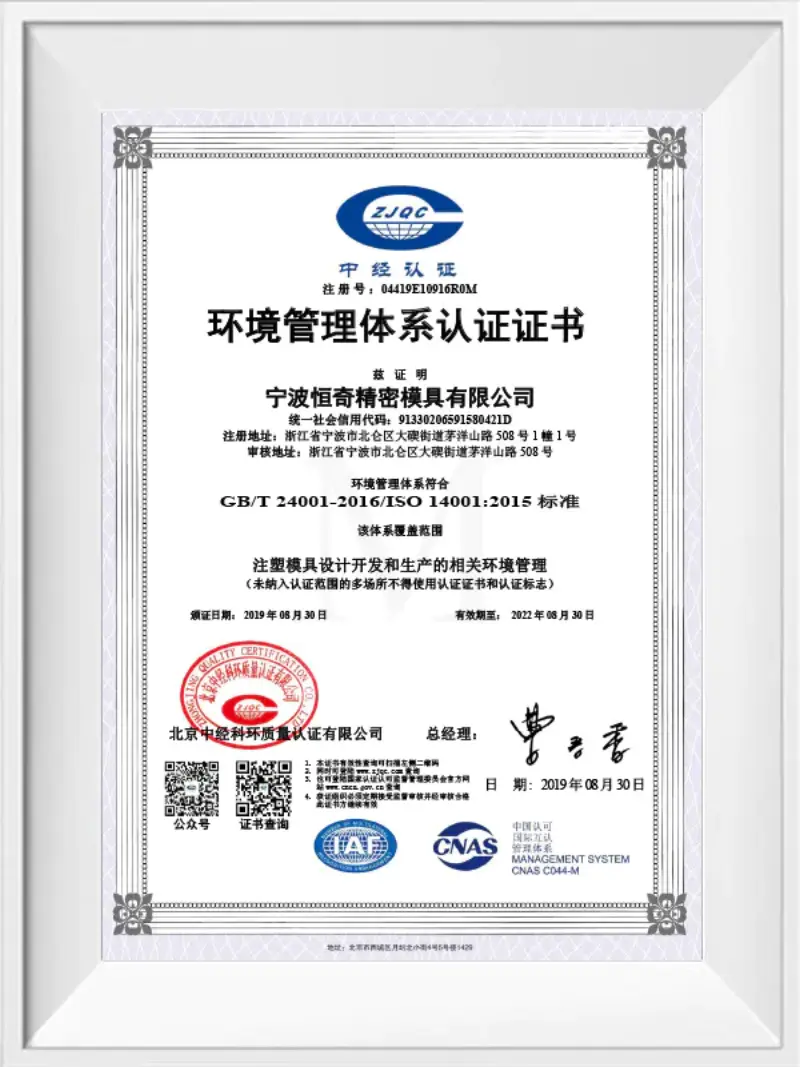
Environmental Management System
AS Certification
SAAA Certification