150 ml IML Yogurt Cup Mould Trial
See a recorded 12-cavity 150 ml IML yogurt cup mould trial running an 8-second cycle on a 480 t injection moulding machine.
- 12 cavities
- 8 s trial cycle
- 480 t machine
IML tooling for packaging manufacturers
Send your yogurt cup drawing or sample, capacity, cavity target and machine tonnage. Hengqi reviews label positioning, robot clearance, cooling, ejection and stack control before preparing a mould proposal.
Custom injection mould projects only. We do not sell finished cups or food containers.
Short project review
No complete drawing yet? Send a sample photo, size or target capacity. One reply method is enough.
Start with the product
Before steel is ordered, the cup, label, machine and output target are reviewed as one production system. This reduces the risk of discovering label, cooling or automation conflicts during the first mould trial.
Reference project
These values describe one completed engineering route. Your final cavity layout, steel, runner, machine and cycle target will be calculated from the actual cup and production plan.
Capacity, diameter, height, wall thickness, rim and stacking requirement.
Label artwork size, material, overlap area, robot and vacuum requirement.
Cavity count, cycle target, hourly output and acceptable process window.
Machine tonnage, tie-bar spacing, shot size and automation clearance.
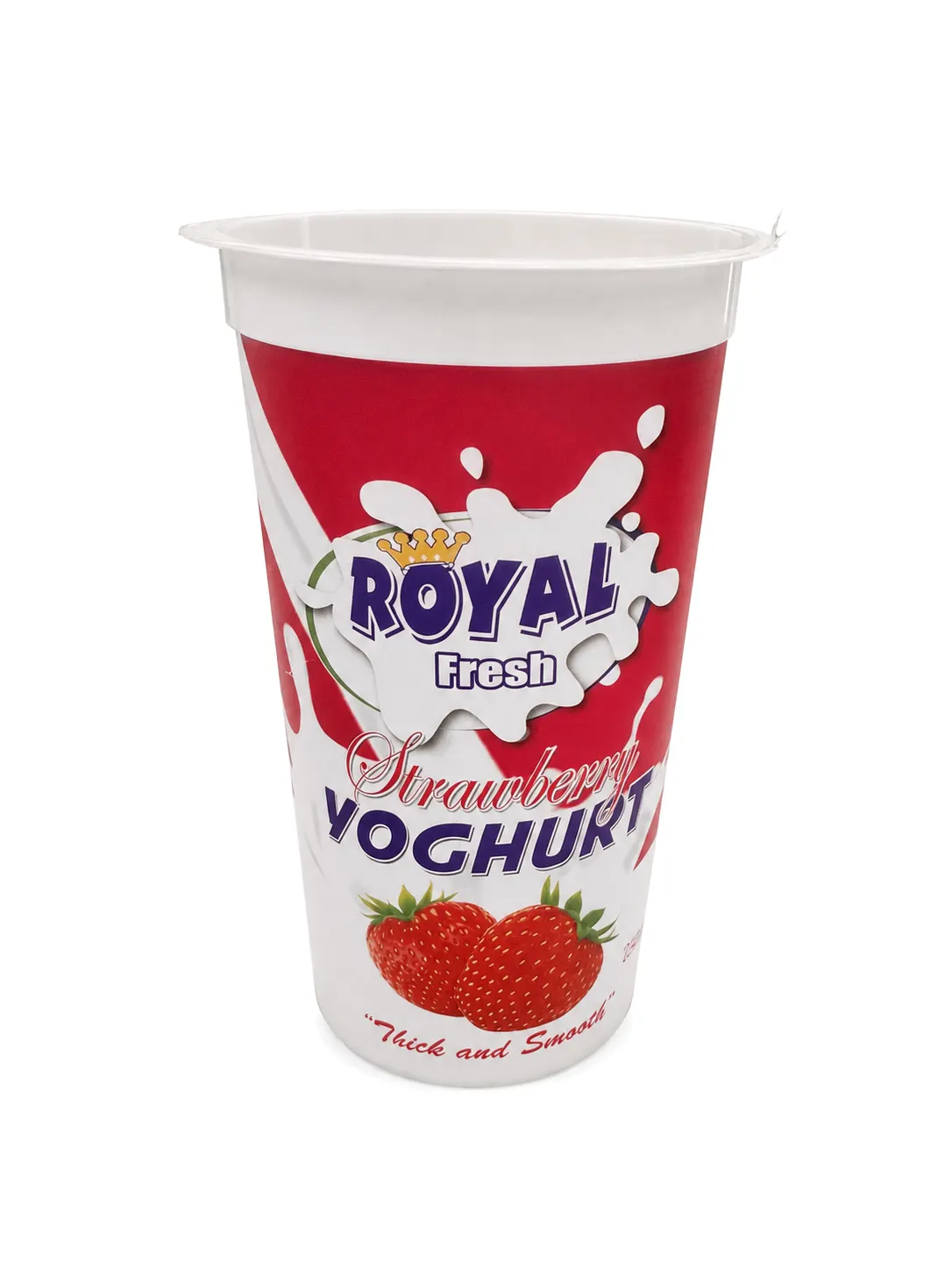
150 ml IML yogurt cup mould
This recorded trial adds production evidence to the engineering details above. It shows a 150 ml IML yogurt cup format, the trial cavity count, cycle and matched injection moulding machine.
See a recorded 12-cavity 150 ml IML yogurt cup mould trial running an 8-second cycle on a 480 t injection moulding machine.
The cavity count, machine tonnage and cycle shown belong to these recorded trials. Final specifications depend on the approved product, resin, machine, cooling and automation.
Real mould evidence
These are real IML cup mould references. The final cavity layout, hot runner, cooling and robot interface are matched to your cup geometry, label, target output and injection machine.
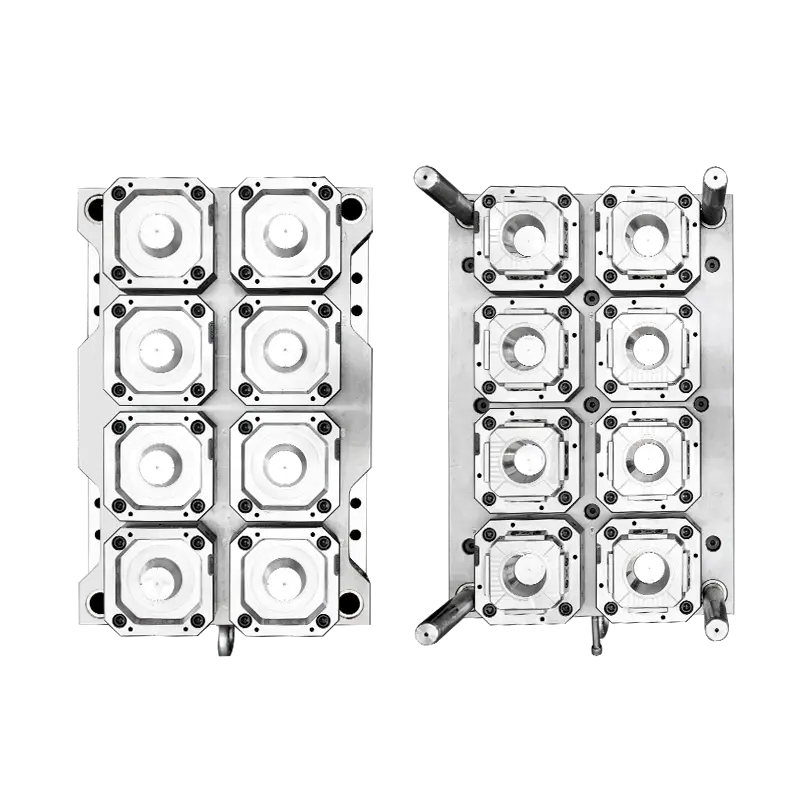
A full tooling reference for cavity layout, label-side access, parting and robot clearance.
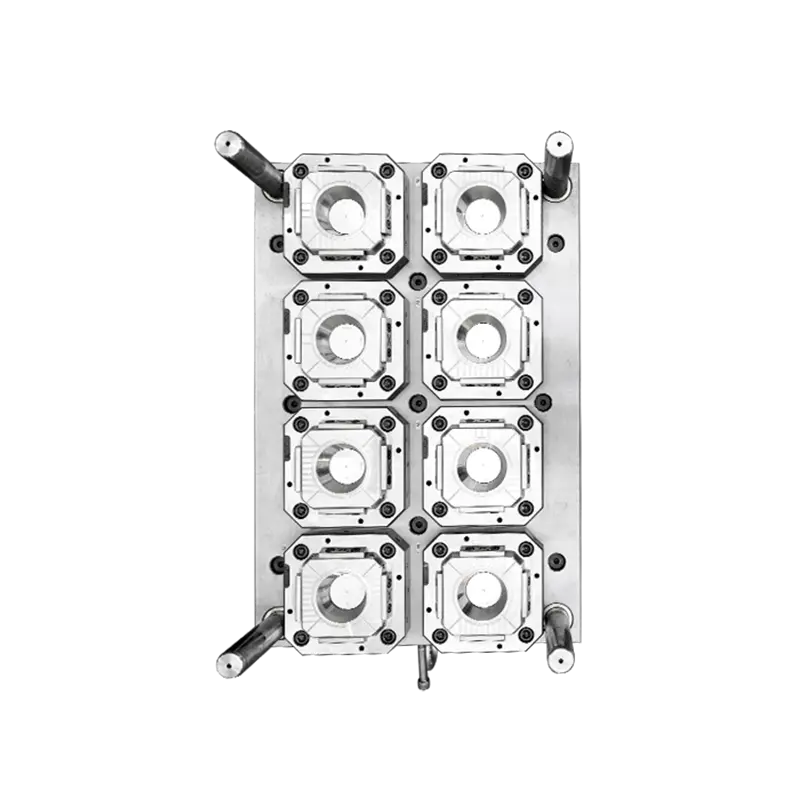
Core-side details support cooling, ejection and consistent cup stacking review.
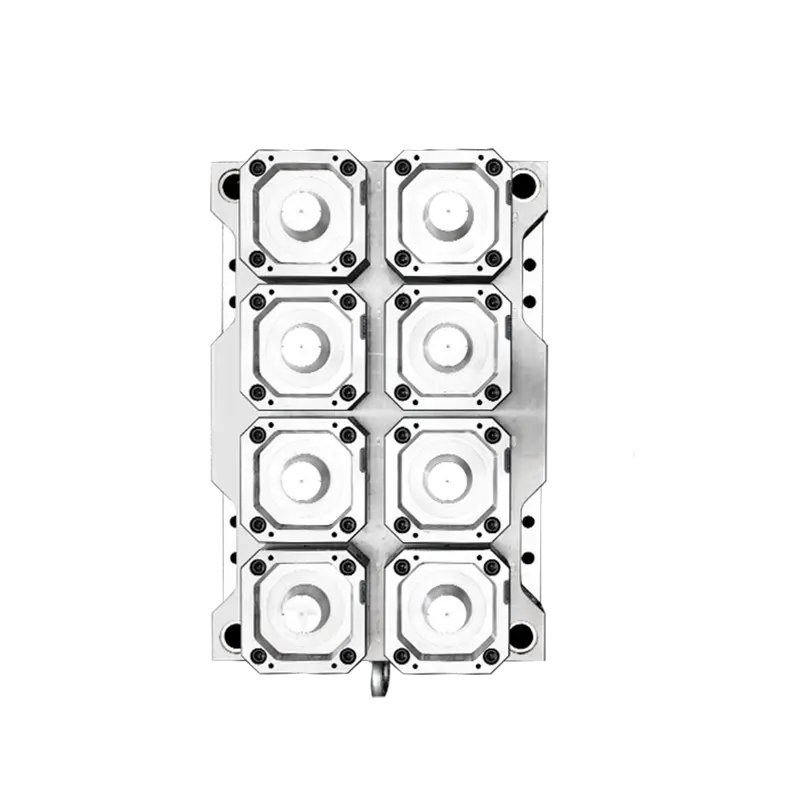
Cavity-side details support label positioning, filling balance and surface control review.
Reviewed before quotation
Cavity count and machine tonnage
Mould steel and mould-base options
Valve-gate or needle-point hot runner
Cooling, ejection and automation fit
Controlled delivery roadmap
The 60-day schedule below is a reference project plan. Every milestone has an engineering output, so speed does not depend on skipping design or validation steps.
Reference delivery
60 days
Manufacturing evidence
Real production images show where each stage happens. Buyers can review the manufacturing route instead of relying only on a finished mould photo.
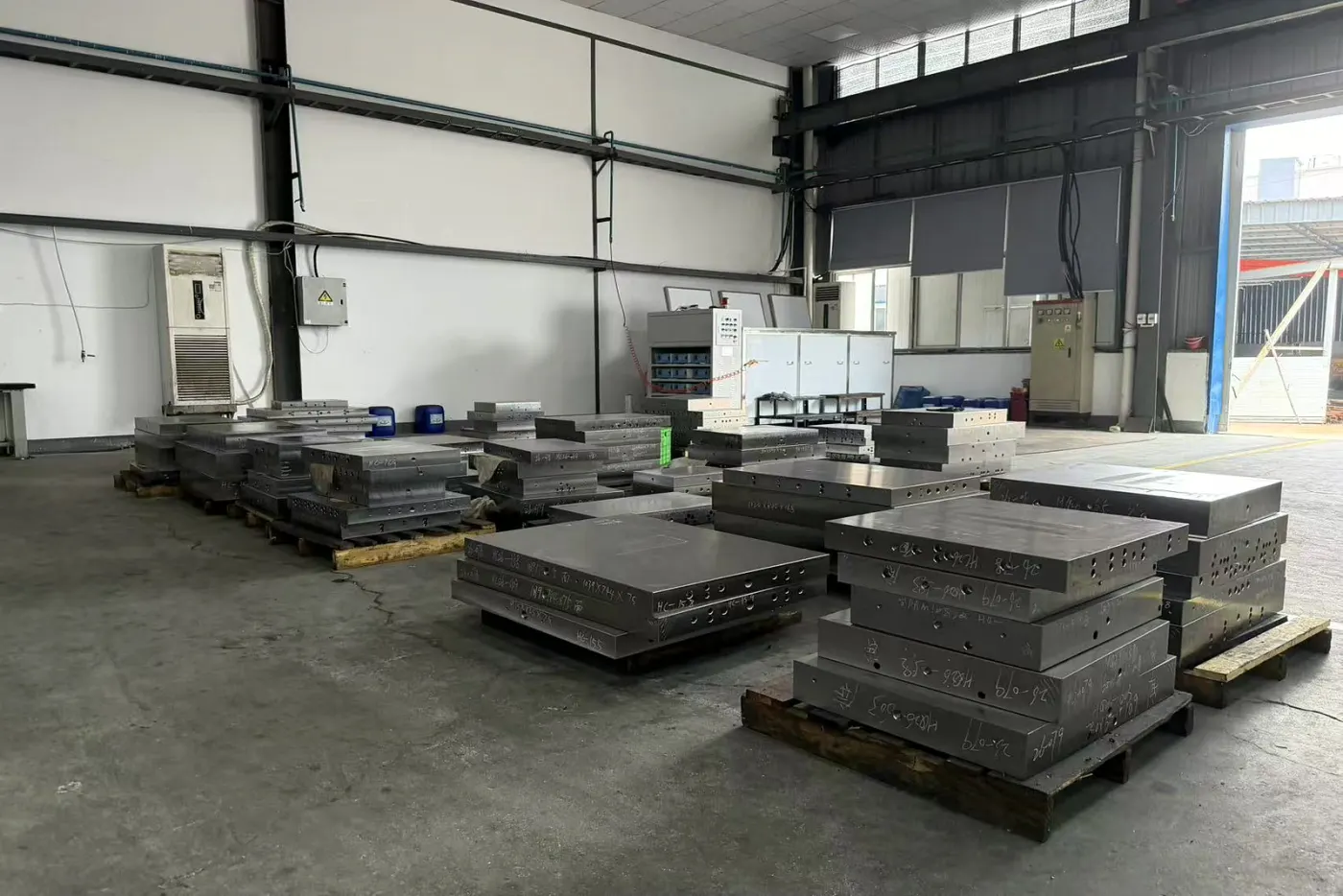
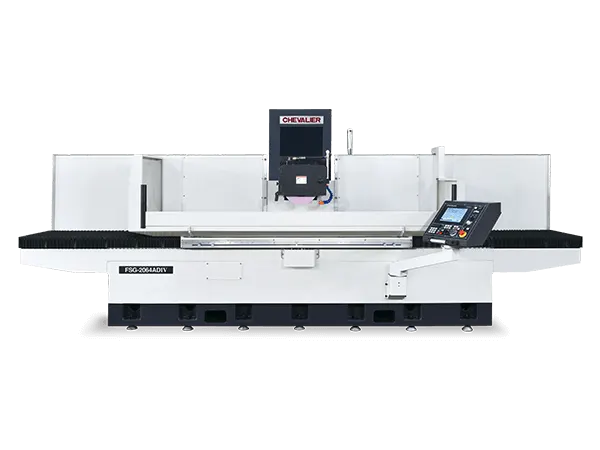
Step 01 · Mould base
Reference faces, flatness and parallelism are established first. Mounting, cooling, locating and ejector features then follow the released design, reducing datum errors and avoidable handoffs later in the project.
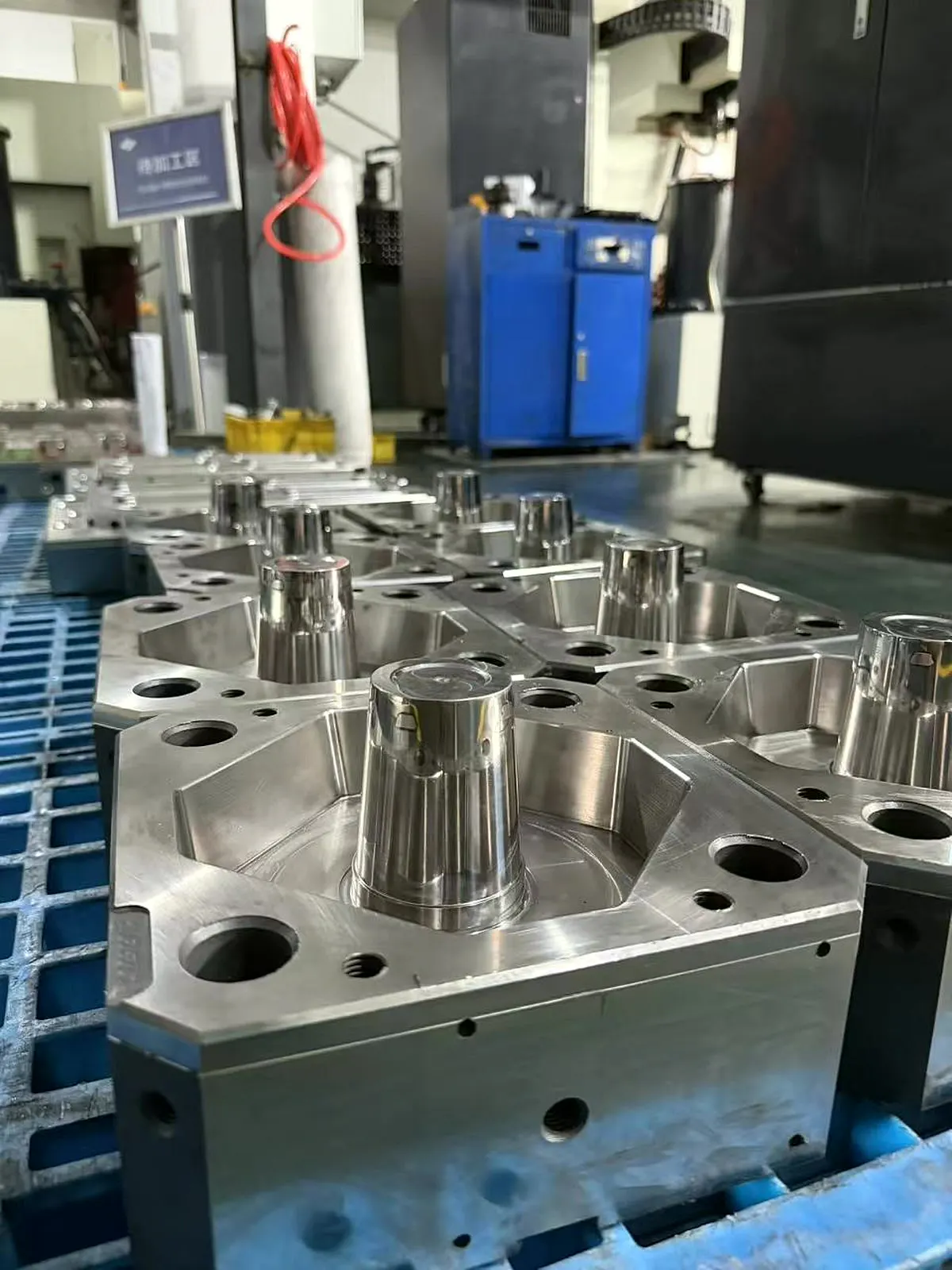
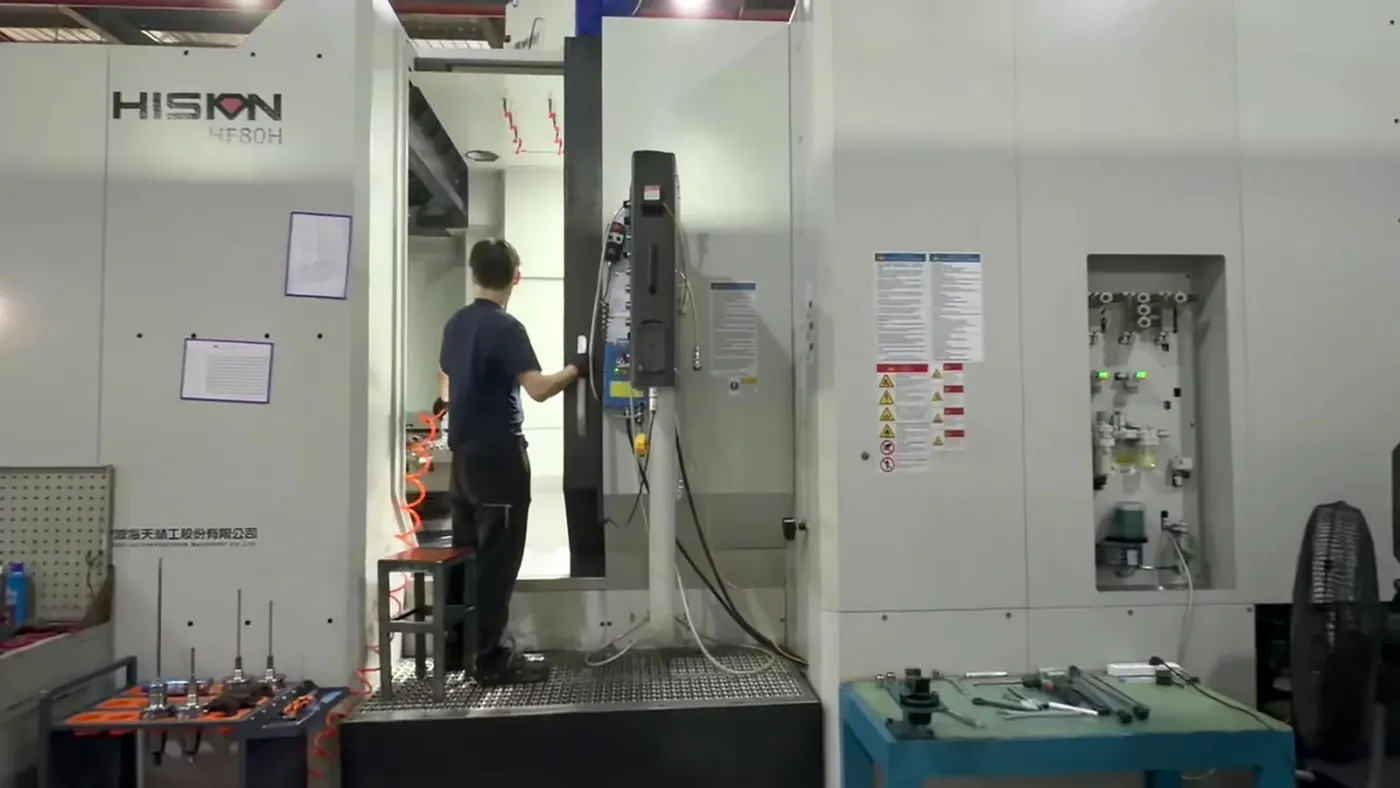
Steps 02–03 · Steel & geometry
Core and cavity steel is selected around wear, toughness and dimensional stability. Five-axis machining reduces repeated re-clamping for angled and contoured features, protecting positional relationships before final finishing.
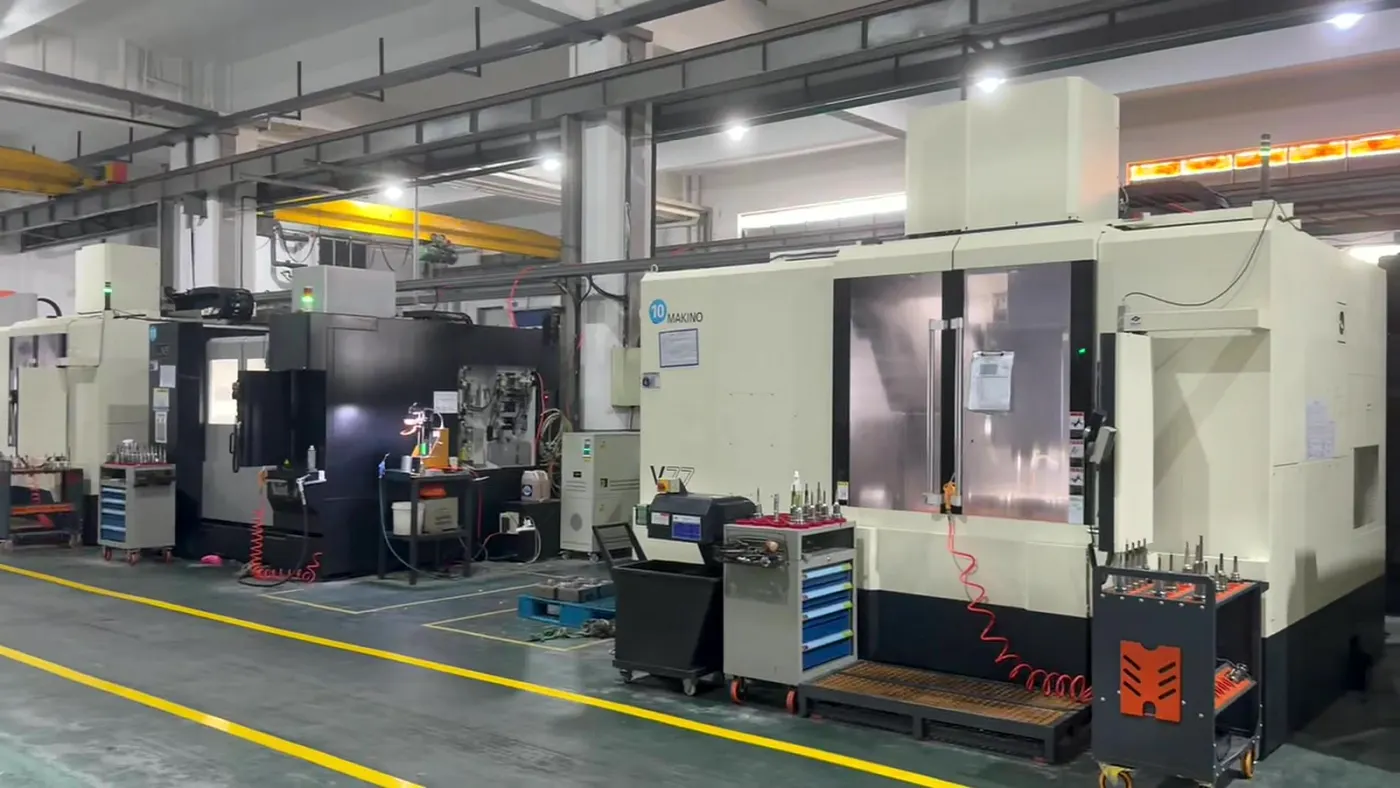
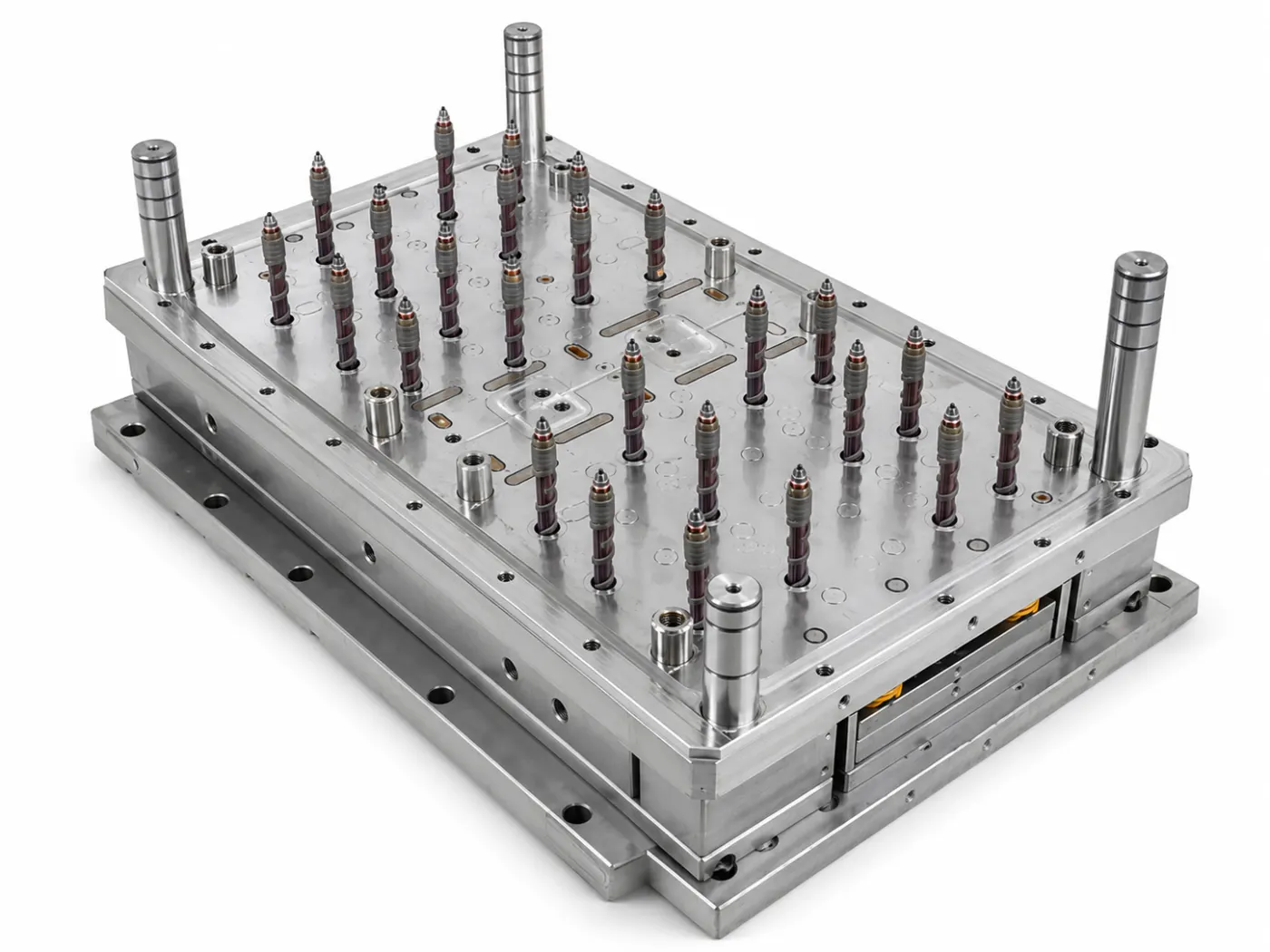
Steps 04–05 · Finishing & assembly
Critical interfaces, inserts and fitting allowances are finished before the hot runner, cooling circuits, moving parts and ejection system are assembled. Selected critical features can be controlled to micron-level requirements where geometry and measurement conditions permit.
Assembly review covers melt balance, cooling, valve-gate position, robot access, ejector action and serviceability.
Hot runner & filling
The hot-runner layout is reviewed with the cup wall, resin, cavity balance and target cycle. The goal is a stable filling window and faster technical response during trial and production.
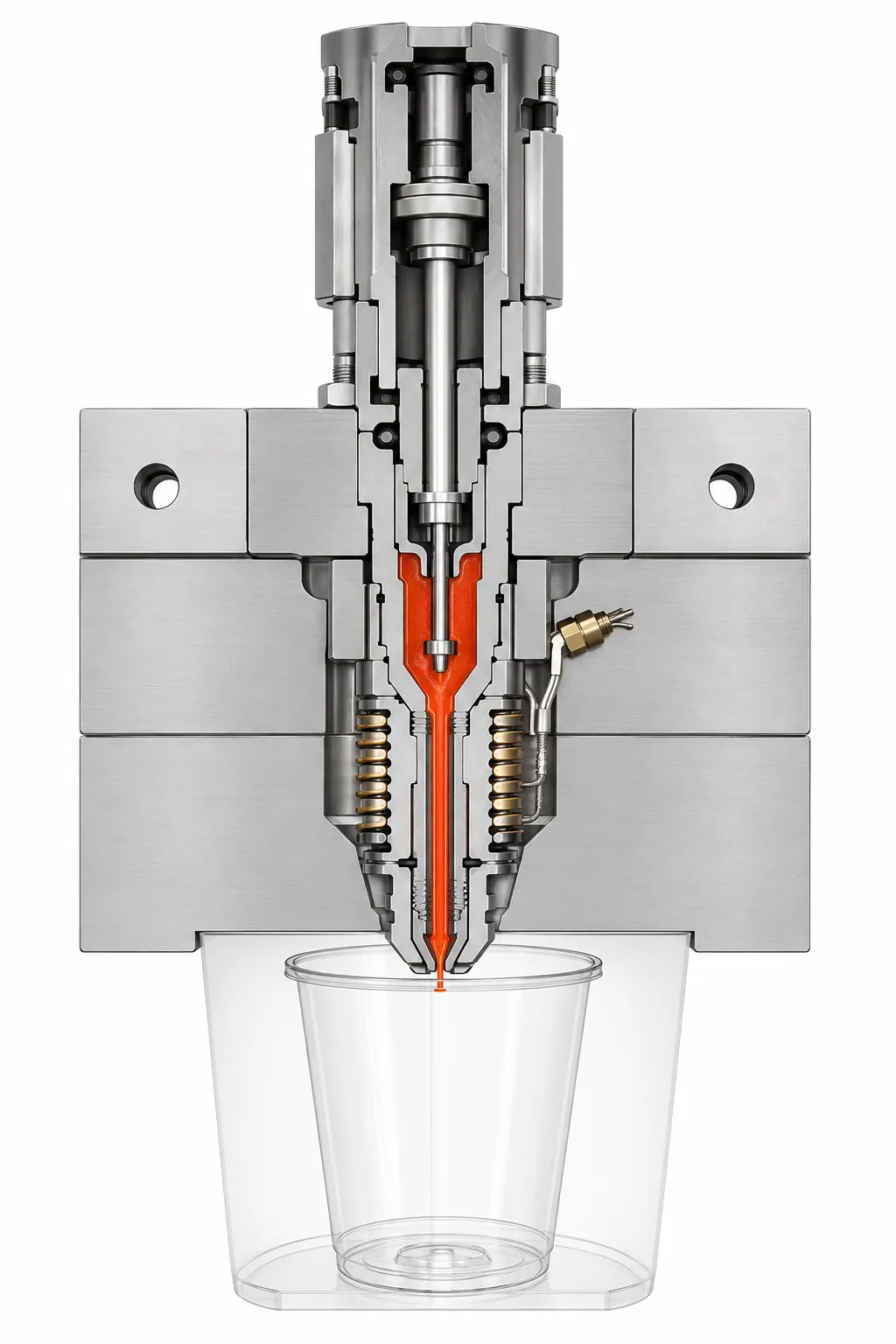
Trial, validation & samples
The trial is not only a proof that the mould opens and closes. Filling balance, label result, cup dimensions, ejection and cycle stability must be checked together on a suitable high-speed machine.
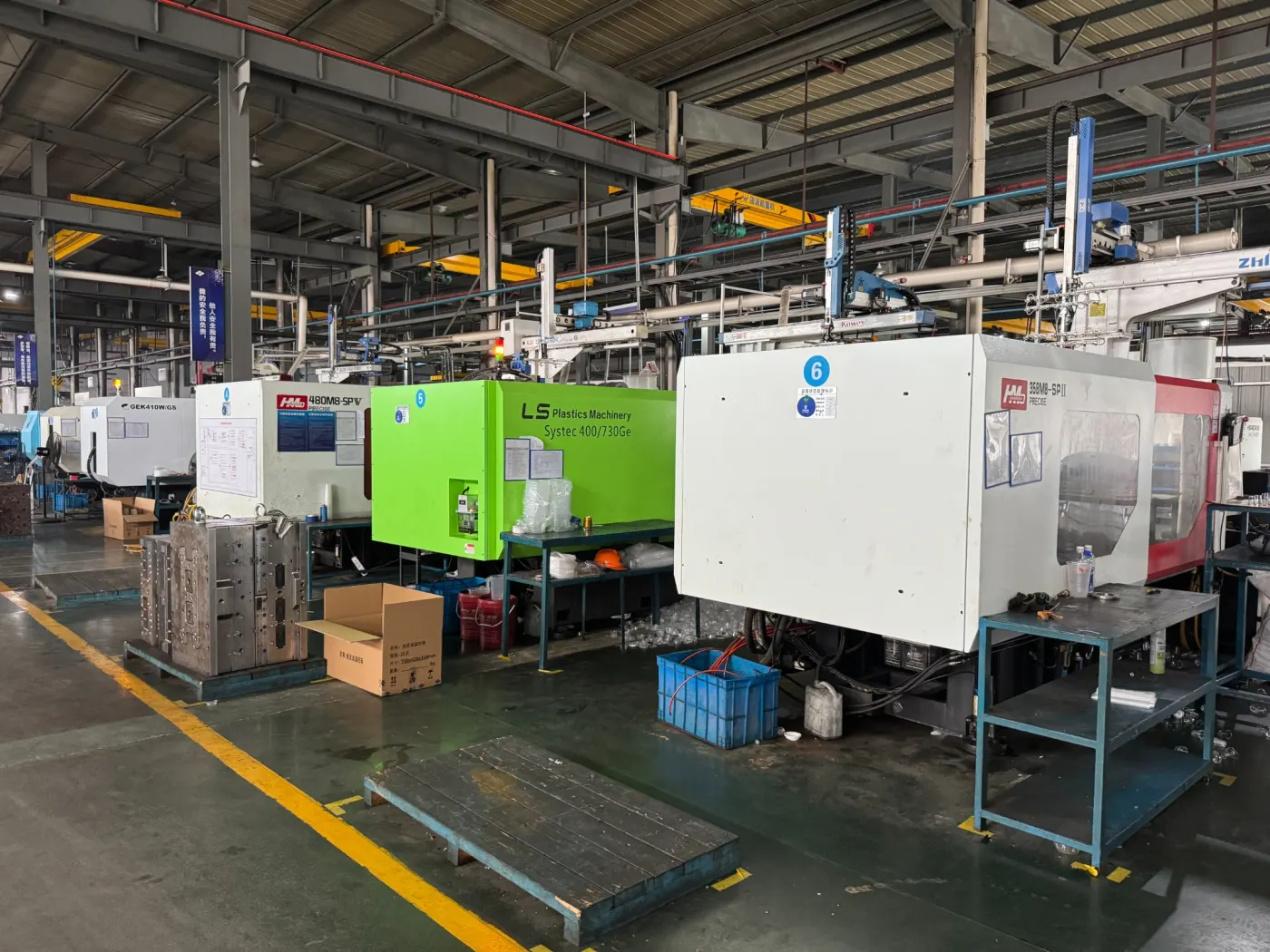
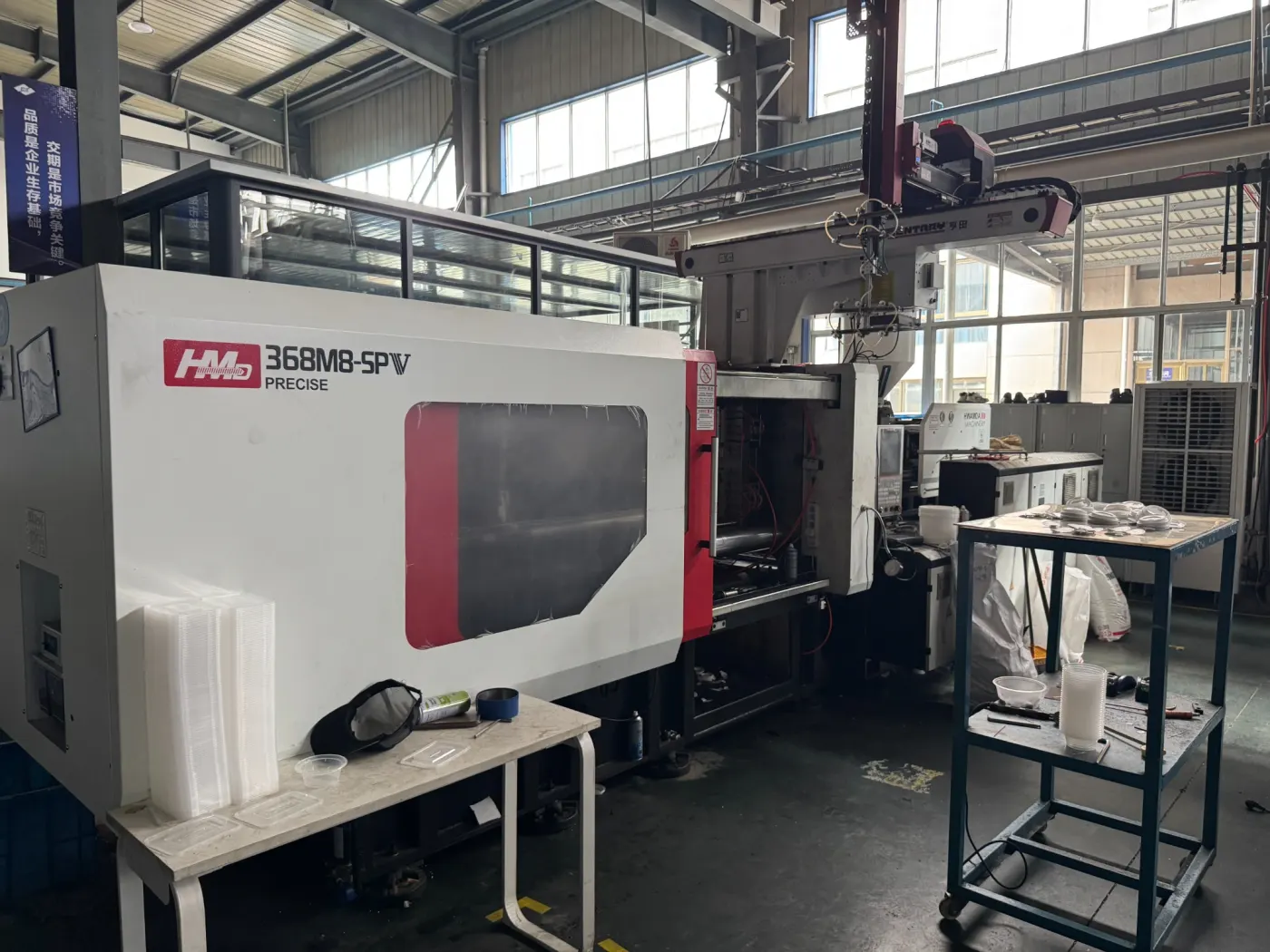
Acceptance points are agreed before trial so the sample review stays connected to the buyer's actual production and packaging requirements.
Buyer confidence
A serious tooling buyer needs more than a product list. The page now connects the cup, the mould structure, manufacturing evidence, trial capability and acceptance method.
Yogurt, ice cream, dairy and food packaging cup projects.
Mould-base, five-axis, finishing, assembly and trial evidence.
Agreed checks for dimensions, IML result, balance and cycle.
Send a drawing, sample photo or initial product requirement.
Continue evaluation
Use these crawlable routes to compare mould categories, verify factory capability and send a complete IML cup mould requirement.
Buyer FAQ
Use these answers to prepare cup, label, machine and acceptance details before Hengqi reviews the mould layout.
Provide the cup drawing or sample, capacity, diameter, height, material, target cavity number, hourly output, machine tonnage and IML label or robot requirement.
Yes. Hengqi makes IML-ready cup moulds for yogurt cups, ice cream cups, dairy cups and thin-wall food packaging cups that need accurate label positioning and stable automated production.
Label stability depends on product draft, label film stiffness, robot placement, vacuum or static holding, cavity precision, balanced filling, cooling and ejection. These points are reviewed before the mould layout is released.
Many thin-wall IML cup projects target about 6 to 6.5 seconds after trial tuning, but the realistic cycle depends on cup weight, wall thickness, resin, cooling design, machine condition and robot speed.
Yes. Capacity, diameter, height, wall thickness, label window, stack height, rim detail and cavity count can be designed from the buyer's sample, 3D drawing and production target.
Validate label position, cup roundness, stack release, rim flatness, sealing-film contact, sample weight balance, cavity consistency and stable cycle time after continuous production.
One project · one responsible team
Share the cup drawing, label concept, resin, target machine and required cycle time. Hengqi will review the mould structure, manufacturing route and delivery milestones.
Discuss the project on WhatsAppShort project review
No complete drawing yet? Send a sample photo, size or target capacity. One reply method is enough.
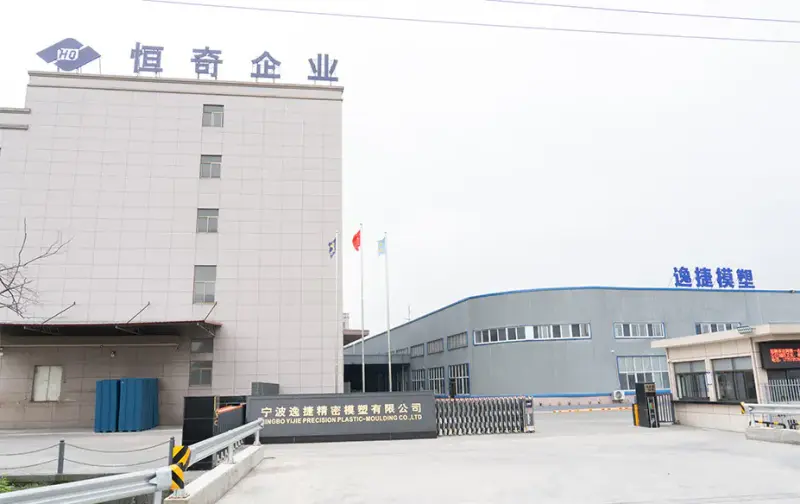
Ningbo Hengqi Precision Mould Co., Ltd. builds custom cup moulds, IML cup moulds and thin-wall food packaging tooling for beverage, dairy, takeaway and food packaging manufacturers. The factory combines mold design, hot runner experience, high-speed machining, assembly, and mold trial support to help buyers move from product sample to stable mass production. Hengqi focuses on practical production details such as cavity balance, cooling efficiency, label positioning, demolding stability and long-term maintenance.
2012
In 2012, Hengqi Mould Factory was established.
2016
In 2016, Hengqi Enterprise established Tianjin factory.
2017
In 2017, Hengqi officially changed from individual to company.
2019
In 2019, Hengqi established Chengdu branch and Betterfork cutlery department.
2024
In 2024, Hengqi continues to expand international markets.