Complete multi-cavity IML packaging mould ready for trial

IML mould manufacturer

IML moulds engineered with the label, robot and machine.

Hengqi has built in-mould labeling moulds for cups, tubs, buckets and pails in Ningbo since 2012. Each IML mould is reviewed with its label, IML robot, injection machine and output target as one production system.

2012Building moulds in Ningbo
30+Export countries and regions
0.35–0.45 mmThin-wall range in production
8–12 cavitiesPublished IML cup trials

Visual engineering record

See the people, decisions and production stages behind the claim.

Each section links a real Hengqi image with the engineering purpose it supports. Buyers can understand what is reviewed, what is manufactured and what evidence is checked before delivery.

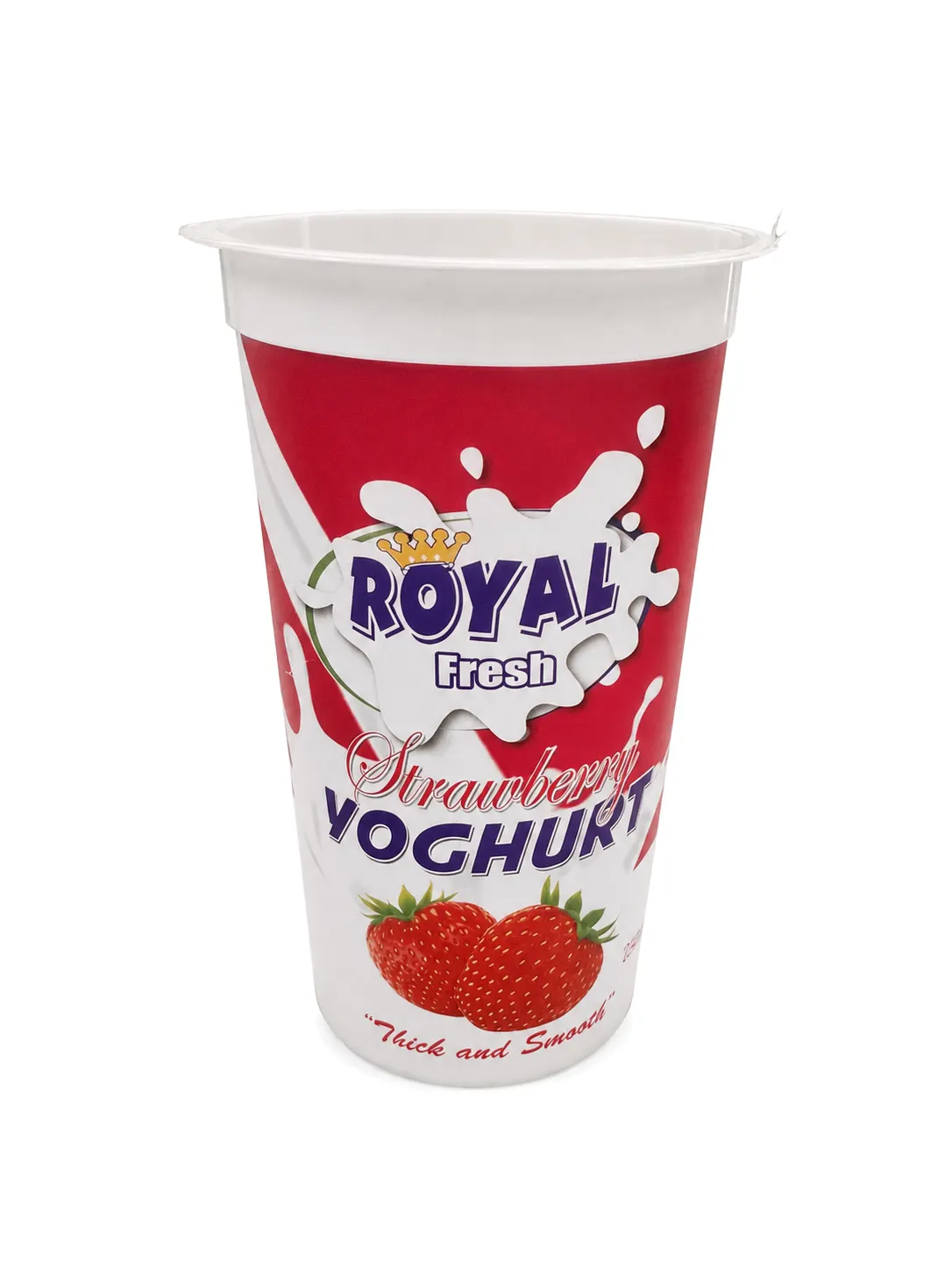
Finished IML yogurt cup with an in-mould label
IML cup · label and container formed in one shot

01 / What is IML

In-mould labeling decorates the package inside the mould.

A robot places a printed film label into the open cavity. The label is held in position, the mould closes and the injected plastic bonds to it, so the container is labelled when it is ejected.

IML is used by brands and food factories that want a printed, durable decoration without a separate labelling step, including those moving from adhesive or printed labels.

  • Label fixed before injection
  • No secondary labelling step
  • Decoration covers the package wall
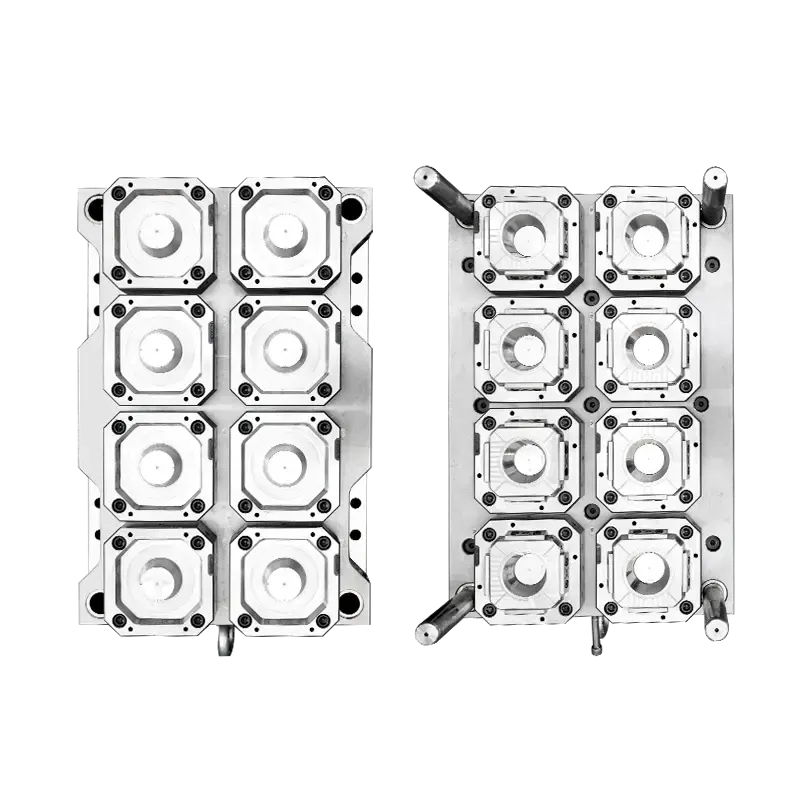
Eight-cavity IML cup mould showing the cavity layout
Multi-cavity IML cup tooling · cavity layout matched to the package

02 / IML applications

Cups, tubs, buckets and pails each need their own IML route.

Thin-wall cups for yogurt, ice cream and dairy packs depend on label placement, rim flatness and stack release at speed. Buckets from 500ml tubs to 2L pails add sidewall stiffness, rim roundness, lid fit and optional handles.

Cheese boxes and round or square food containers can be designed for IML once wall, rim, corner filling and ejection are defined.

  • IML yogurt, ice cream and dairy cups
  • 500ml buckets to 2L food pails
  • IML cheese boxes and food containers
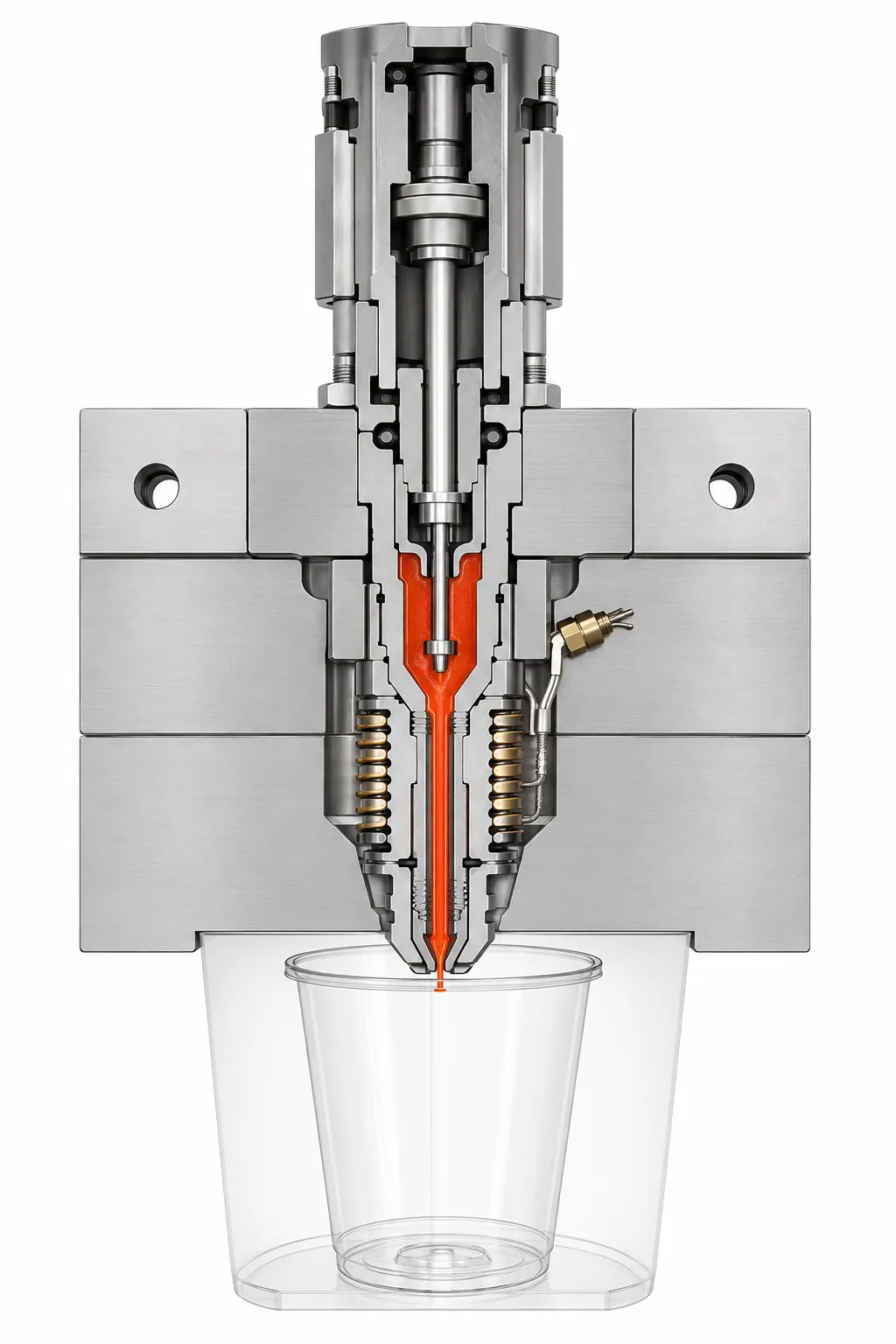
Valve-gate hot runner section of an IML packaging mould
Valve-gated melt delivery · gate reviewed against label appearance

03 / Label and product

The label must sit on a mouldable, repeatable surface.

Draft, rim, ribs, visible surfaces, label size, seam and overlap are reviewed together with the label film stiffness so the artwork stays where it was placed.

Gate position, flow balance and cooling are matched to the label area to reduce deformation, weak zones and visible defects.

  • Label size, seam and overlap
  • Gate position versus label area
  • Balanced filling and cooling
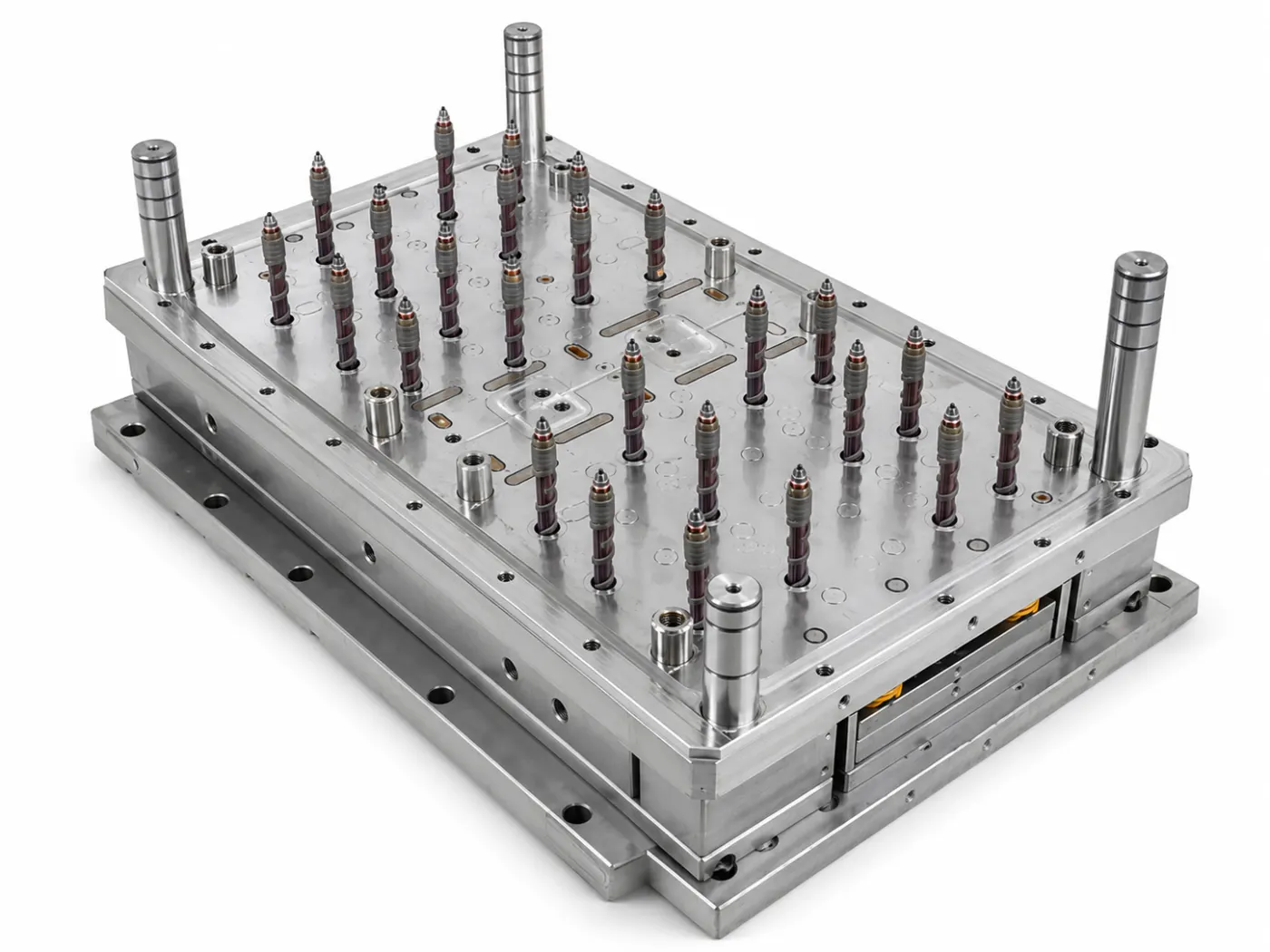
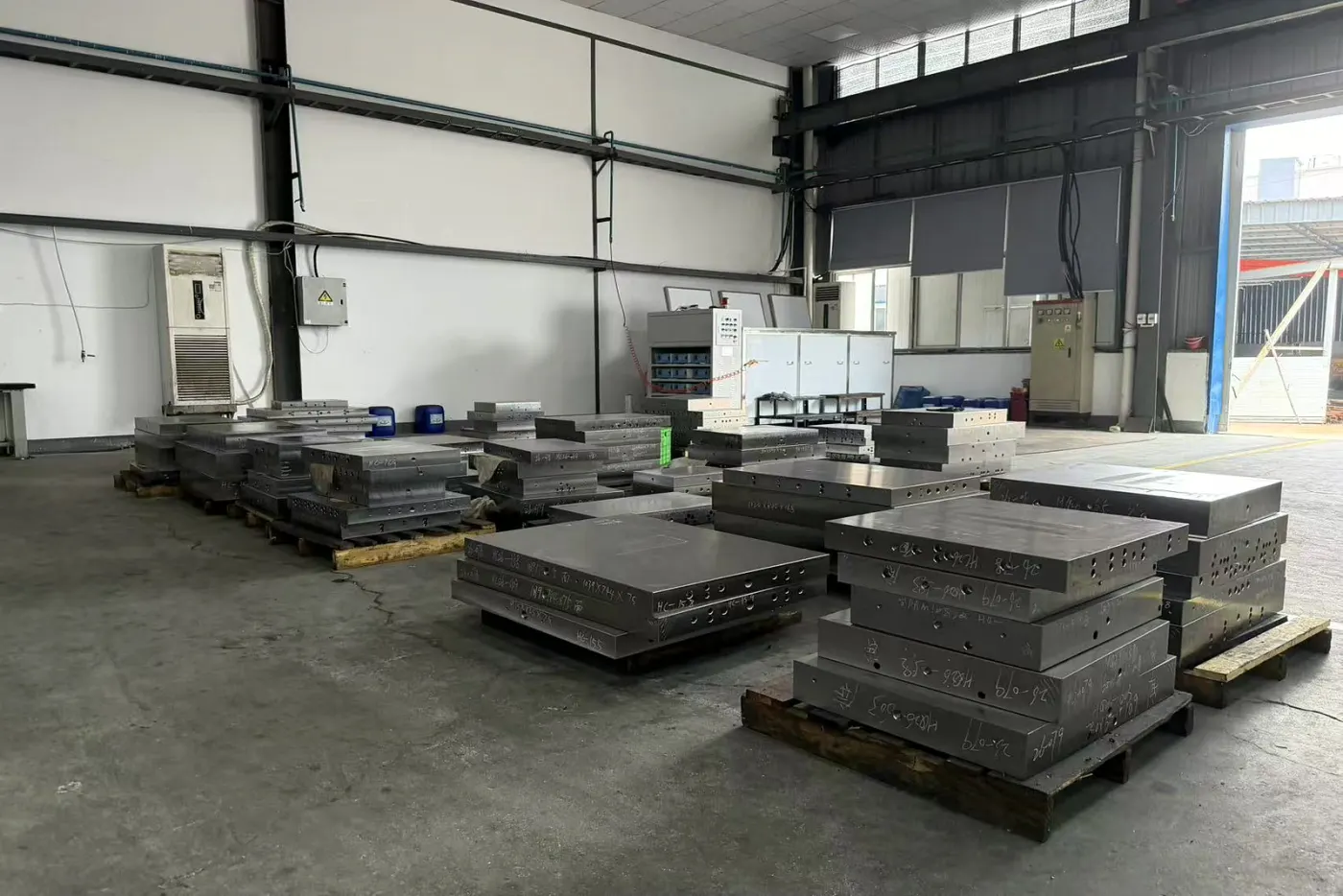
IML mould bases prepared for cavity and robot-access machining
Mould structure · service space and robot access resolved early

04 / Robot and cavity layout

Robot clearance is designed in before steel is released.

Cavity pitch, mould opening, side-entry or top-entry robot motion, static or vacuum label holding and the take-out path are checked against the buyer's robot and machine.

Cavity count is calculated from part weight, shot capacity, tie-bar space, robot speed and the hourly output target.

  • Side-entry or top-entry loading
  • Static or vacuum label holding
  • Take-out and stacking path
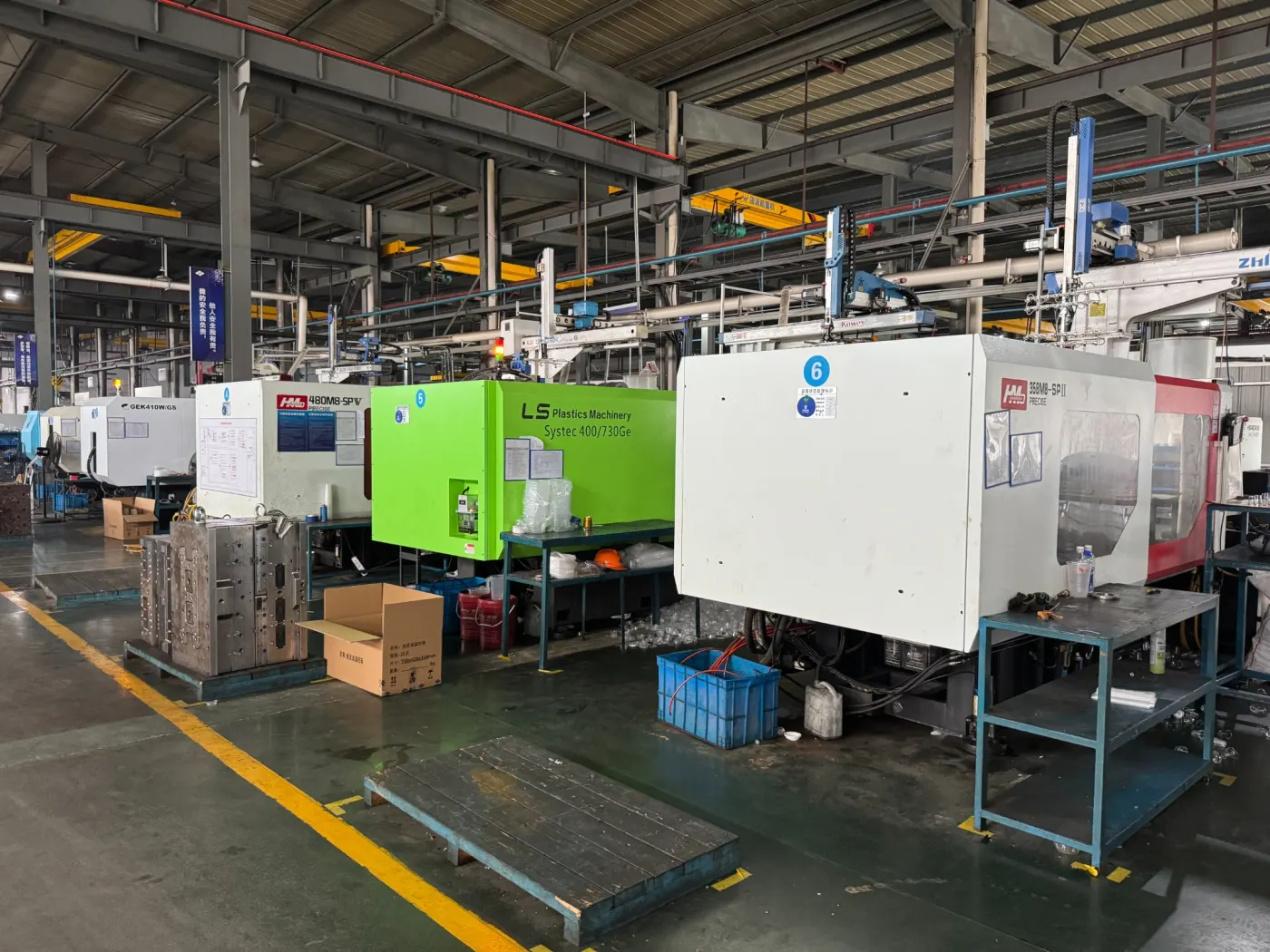
Injection moulding machine line used for IML mould trials
Production trial · mould, label and robot validated together

05 / Trial validation

Continuous robot operation is part of the mould trial.

Trials review label position, cavity weight balance, dimensions, ejection, robot stability and stacking under an agreed continuous process window.

Published references include a 250 ml IML yogurt cup mould with 8 cavities, 0.45 mm wall and a 6.5-second cycle target on a 420 t machine, and a recorded 12-cavity 150 ml IML cup trial running an 8-second cycle on a 480 t machine.

  • Label position and adhesion
  • Cavity-to-cavity weight balance
  • Stable continuous output

IML project route

Define the package. Match the line. Validate as a system.

The expensive decisions in an IML mould are fixed early, so they are reviewed before the mould layout is released.

01

Define the package

Capacity, wall, rim, lid and label artwork are turned into controlled engineering inputs.

02

Match the line

Robot model, loading direction, machine shot size and tie-bar space set the cavity layout.

03

Build the mould

Hot runner, cooling, ejection and label holding are designed and machined together.

04

Trial continuously

Label result, balance, ejection, stacking and robot motion are checked at production speed.

Start with the production requirement

Send the package and the line. We will map the IML mould route.

IML quotations are comparable only when the label, robot, machine and output are defined.

Send project information
01Product drawing or sample, capacity and material
02Label size, film and overlap area
03IML robot model and loading direction
04Machine tonnage, shot size and tie-bar space
05Target cavity count or hourly output
06Lid, handle or stacking requirements

Buyer questions

Clarify the project before steel is committed.

What is an IML mould?

An IML (in-mould labeling) mould is an injection mould built to hold a printed film label inside the cavity while the plastic is injected. The label bonds to the part, so the cup, tub or bucket leaves the mould already decorated.

How is an IML mould different from a normal packaging mould?

The mould must also locate and hold the label, leave clearance for the IML robot and keep the gate, cooling and filling away from label defects. Cavity pitch, mould opening, label holding and the take-out path are fixed before steel release.

Which IML packages does Hengqi make moulds for?

Hengqi builds IML moulds for yogurt, ice cream and dairy cups, food tubs, 500ml yogurt buckets, 2L food pails and cheese boxes. Round and square thin-wall containers can also be designed to add IML.

Can the mould be matched to my existing IML robot?

Yes. Share the robot model, side-entry or top-entry loading direction, arm or mandrel dimensions, mould-opening requirement and take-out sequence so cavity pitch and access can be reviewed before the layout is fixed.

How many cavities should an IML mould have?

Cavity count depends on part projected area and weight, machine shot capacity and tie-bar space, injection speed, cooling, robot cycle and the required hourly output. It should be calculated for the project rather than copied from another package.

What cycle time can an IML cup mould reach?

Many thin-wall IML cup projects target about 6 to 6.5 seconds after trial tuning. The realistic cycle depends on cup weight, wall thickness, resin, cooling design, machine condition and robot speed.

What makes two IML mould quotations differ?

Steel grade, cavity count, hot runner layout, cooling design, label-holding method, robot clearance, spare parts and trial scope all change the price. Comparing only the package capacity can hide those differences.