| Parameter | Value |
|---|---|
| Typical product | 4-compartment food container for rice, vegetables and protein separation |
| Machine matching | 350T high-speed injection molding machine |
| Cycle time target | Within 6 seconds per shot, depending on material and part weight |
| Cavity configuration | 2 cavities (customizable by line capacity) |
| Sealing options | Heat-seal film, snap-on lid or combined project review depending on the buyer's packing line |
| Acceptance focus | Partition fill balance, rim flatness, sealing land width, stack release, tray stiffness and lid or film validation |
| Useful RFQ data | Tray drawing, lid or film sample, compartment volume ratio, resin grade, filling temperature, machine data and packing method |
| Front and rear mold material | Domestic or imported 2344/S136/customer specified |
| Mold base material | P20/4Cr13/Customer specified |
| Runner options | Needle valve or needle point hot runner |
| Customization | Compartment ratio, rim sealing geometry, stack height and label area |
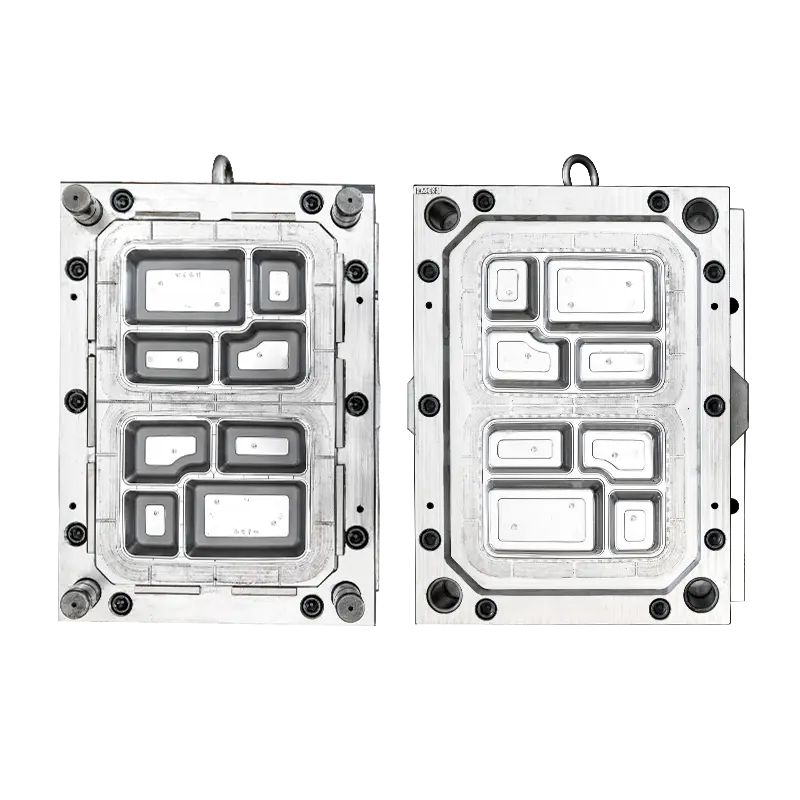
This 2CAV 4-compartment lunch box mould is designed for producers that need one PP container to separate multiple food portions in takeaway, meal prep and retail ready-food channels.
The mould platform targets stable production on high-speed lines and can be adjusted to match filling format, lid sealing requirements and logistics stacking needs.
For buyers, the important questions are compartment ratio, sealing flatness, stack height, target part weight and whether the container must work with film sealing, snap-on lids or both.
Compartment depth distribution, wall thickness balance and rim flatness are key factors for seal quality, cycle time and container stiffness.
Hengqi can optimize cavity details, runner design and steel selection based on your target resin, annual output and automation level.
A well-defined mould brief helps avoid later rework: send the tray drawing, material grade, filling temperature, lid or film type, machine data and the packing method planned for the line.
A 4-compartment tray mould should be reviewed around the actual food filling layout because rice, sauce, protein and vegetable sections can create different strength and sealing requirements.
If the tray will use heat-seal film, Hengqi needs the sealing land width, film type, filling temperature and allowable rim flatness tolerance before confirming the compartment wall height.
If the tray uses a snap-on lid, the tooling discussion should focus on rim engagement, corner stiffness, stack release and whether the packing line uses manual handling or automatic denesting.
During sampling, buyers should compare partition filling, rim flatness and stack release across both cavities after the mould reaches stable continuous running conditions.
If the tray is film sealed, sample approval should include sealing tests after filling because food temperature and tray flatness can expose rim variation that is not obvious on an empty part.
If the tray uses a snap lid, Hengqi recommends checking closure force, corner engagement, nested tray separation and transport stacking before approving the final evidence package.
It is commonly used for ready meals and takeaway packaging where different foods need to stay separated in one container.
Yes. Compartment ratio, depth and rib structure can be customized from your product drawing or sample.
Yes. It is designed for high-speed 350T-class production with cycle targets within 6 seconds, subject to material, weight and cooling conditions.
Yes. The rim flatness, sealing land width and compartment wall height can be reviewed around the customer's sealing film or lid requirement.
The internal partition walls add filling, cooling and sealing challenges, so the mould must balance compartment depth, rim flatness, wall stiffness and demolding more carefully.
Check partition fill balance, rim flatness, stack release, tray stiffness, sealing film or lid fit and whether samples from both cavities remain stable after cooling.
Send the product drawing, sample weight, cavity target, machine tonnage, material, and expected cycle time. Hengqi can review the tooling structure and reply with a practical proposal for production.
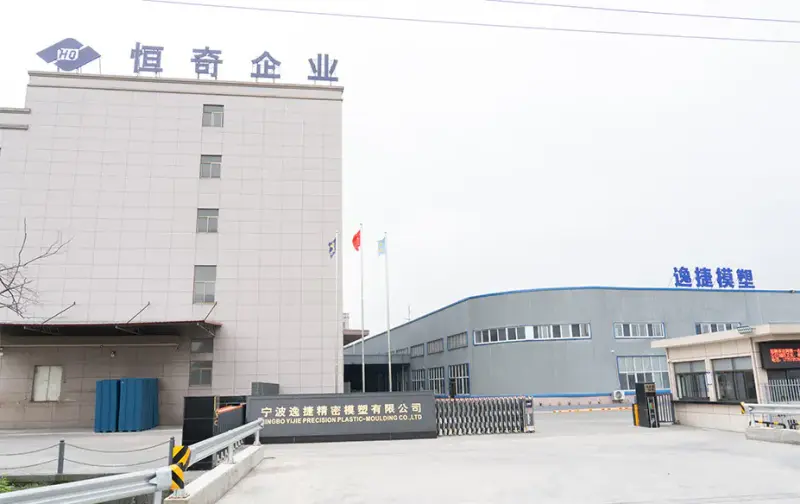
Request a Mold QuoteNingbo Hengqi Precision Mould Co., Ltd. is professional China Plastic Injection Mould Manufacturers and custom Plastic Injection Mould factory, engaged in the development and manufacture of thin-wall packaging moulds. Our company has complete manufacturing equipment, scientific quality management system, rich practical experience in mould and hot runner production, combined with professional system design, using high-precision high-speed machining centers to achieve mold processing high standards. Hengqi Mould is in the leading position in the field of thin-wall injection molds in China. It produces thousands of sets of PP lunch boxes, cups and in-mold labeling system molds with a wall thickness of 0.35-0.45MM each year, which are supplied to the domestic market and exported to overseas. Hengqi Mould adheres to the spirit of continuous innovation and development of precision moulds.
2012
In 2012, Hengqi Mould Factory was established.
2016
In 2016, Hengqi Enterprise established Tianjin factory.
2017
In 2017, Hengqi officially changed from individual to company.
2019
In 2019, Hengqi established Chengdu branch and Betterfork cutlery department.
2024
In 2024, Hengqi continues to expand international markets.